Wednesday, April 1, 2026

Bishop Hobbies

Scale Model Builder

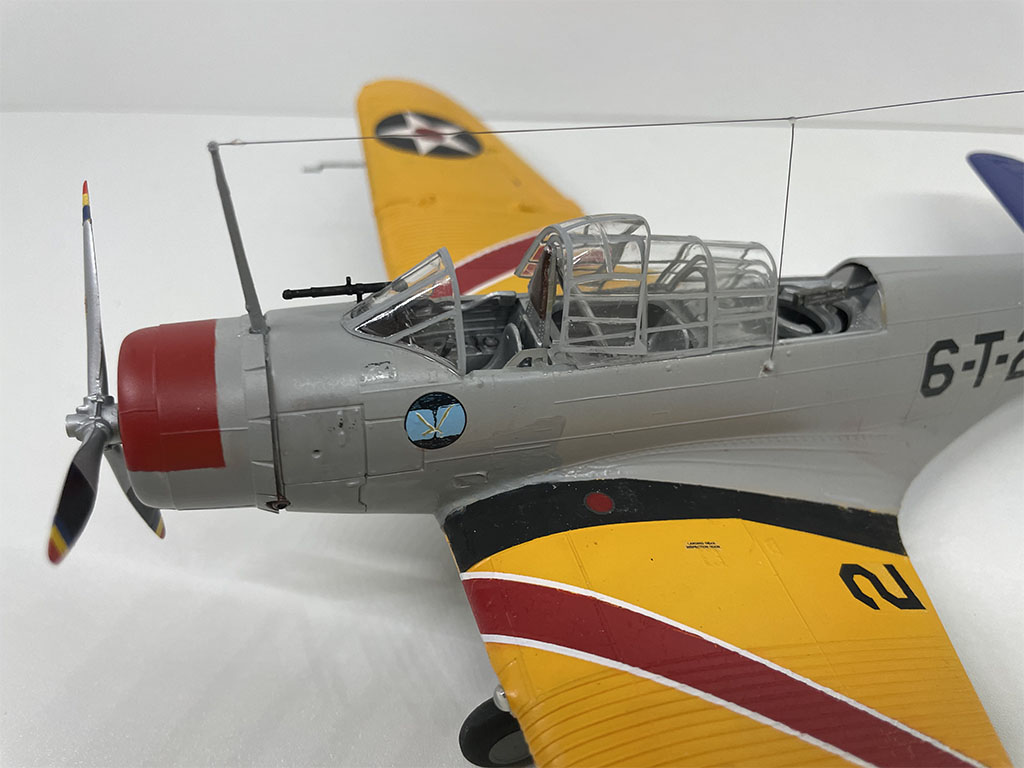
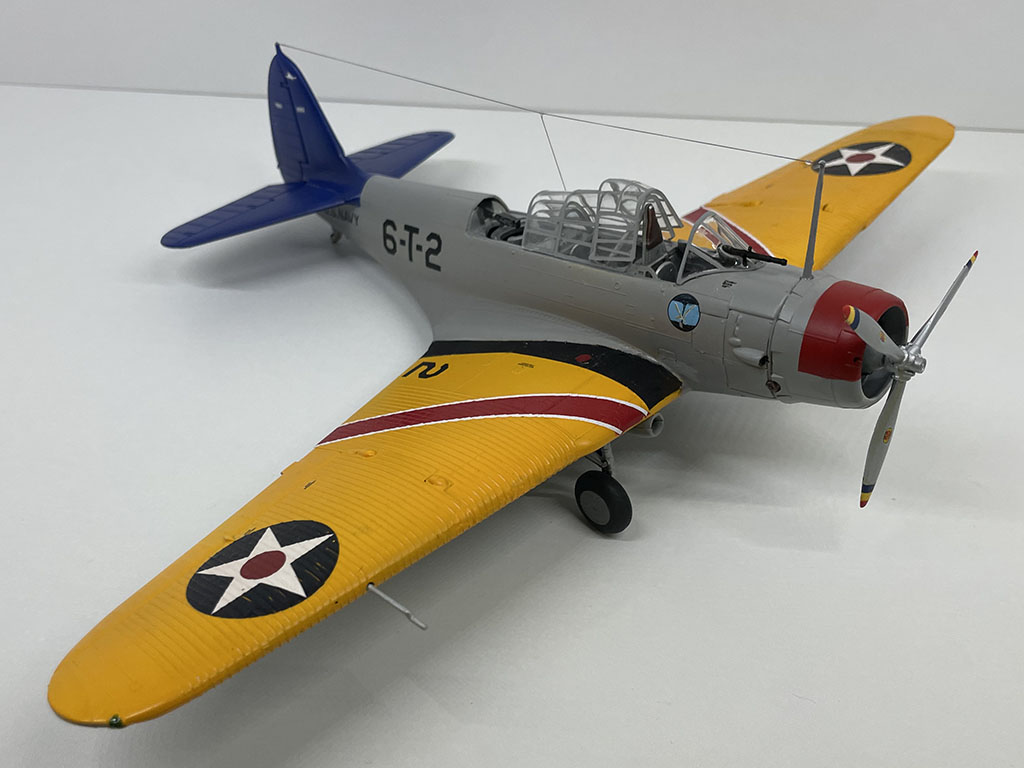
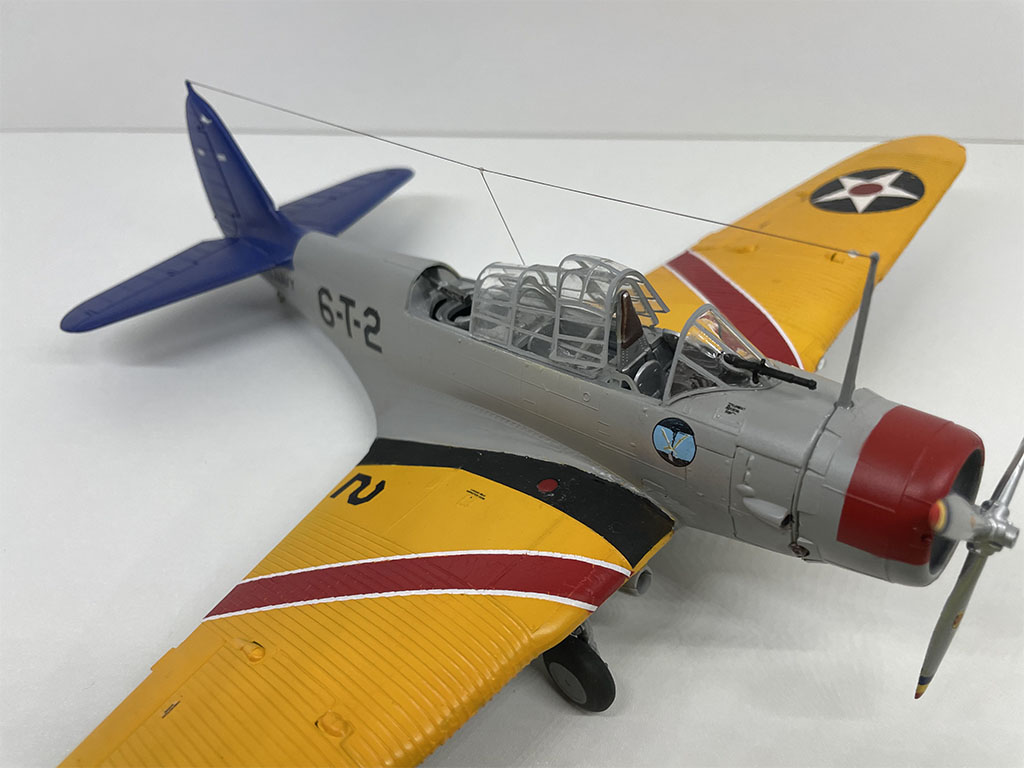
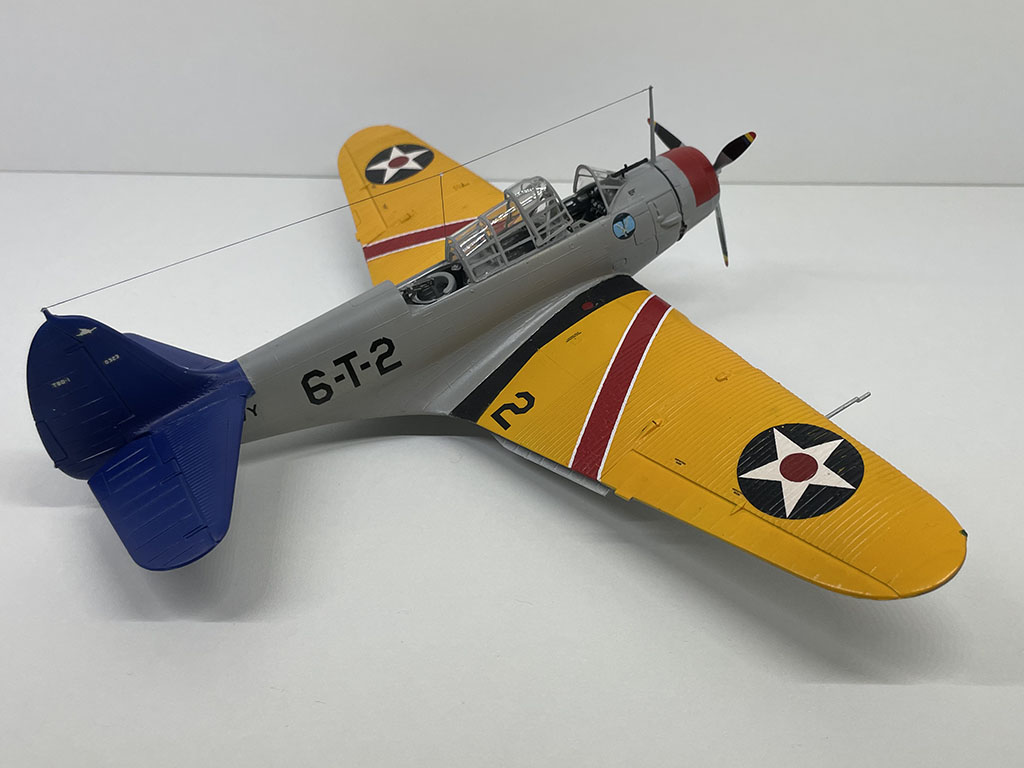
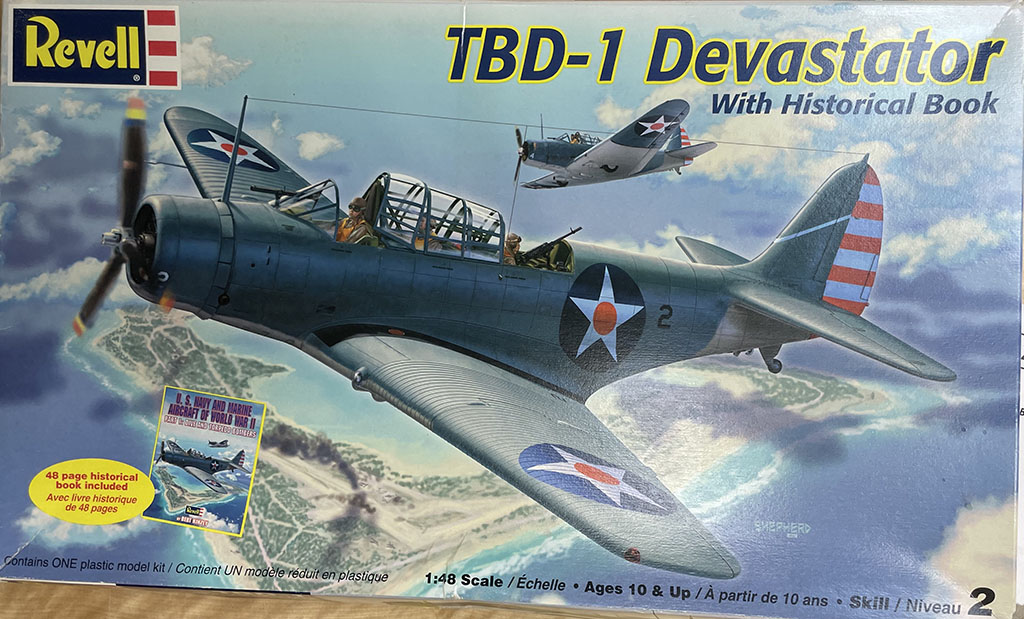
1/48 Revell TBD-1

Posted by Paul On July - 1 - 2020

7/1/2024

First a little background.

The Douglas TBD Devastator was an American torpedo bomber of the United States Navy. Ordered in 1934, it first flew in 1935 and entered service in 1937. At that point, it was the most advanced aircraft flying for the Navy, however by the time of the US entry into World War 2, the TBD was already obsolete.

The Devastator performed well early war, most notably in the Battle of Coral Sea, but earned notoriety for a catastrophic performance during the Battle of Midway in which 41 Devastators recorded zero torpedo hits with only six surviving to return to their carriers. Although much of the Devastator's dismal performance was later attributed to the many well-documented defects in the US Mark 13 torpedo, the aircraft was withdrawn from frontline service after Midway, being replaced by the Grumman TBF Avenger.

The Douglas XTBD-1 was ordered on 30 June 1934 after being one of the winners of a US Navy competition for new bombers to operate from its aircraft carriers. Other aircraft also ordered for production as a result of the competition included the Brewster SBA, the Vought SB2U Vindicator, and the Northrop BT-1, the last of which would evolve into the Douglas SBD Dauntless. The Great Lakes XB2G, Great Lakes XTBG, Grumman XSBF, Hall XPTBH and Vought XSB3U were also tendered to the specification but were not developed beyond prototype status.

The XTBD Devastator flew for the first time on 15 April 1935 while marking a number of "firsts" for the US Navy. It was the first American carrier-based monoplane to be widely used, the first all-metal naval aircraft, the first with a completely enclosed cockpit, the first with power-actuated (hydraulically) folding wings. A semi-retractable landing gear was fitted, with the wheels protruding 10 in (250 mm) below the wings to potentially limit damage to the aircraft in a "wheels-up" landing. A crew of three was normally carried beneath a large "greenhouse" canopy almost half the length of the aircraft. The pilot sat in front; a rear gunner/radio operator took the rearmost position, while the bombardier occupied the middle seat. During a bombing run, the bombardier lay prone, sliding into position under the pilot to sight through a window in the bottom of the fuselage, using the Norden bombsight.

The normal TBD offensive armament consisted of either a 1,935 lb (878 kg) Bliss-Leavitt Mark 13 aerial torpedo or a 1,000 lb (450 kg) bomb carried semi-recessed in the fuselage. Alternatively, three 500 lb (230 kg) general-purpose bombs (one under each wing root and one inside the fuselage), or twelve 100 lb (45 kg) fragmentation bombs (six under each wing root), could be carried. This weapons load would often be used when attacking Japanese targets on the Gilbert and Marshall Islands in 1942. Defensive armament consisted of a .30 in (7.62 mm) Browning machine gun for the rear gunner. Fitted in the starboard side of the cowling was either a .30 in (7.62 mm) or .50 in (12.7 mm) M2 Browning machine gun.

The powerplant was a 850 hp (630 kW) Pratt & Whitney R-1830-64 Twin Wasp radial engine, a development of the prototype's 800 hp (600 kW) Pratt & Whitney XR-1830-60/R-1830-1. Other changes from the 1935 prototype included a revised engine cowling and a raised cockpit canopy to improve visibility.

The XTBD had a flat canopy that was replaced on production models by a higher, domed canopy with a rollover bar. Other than requests by test pilots to improve pilot visibility, the prototype easily passed its acceptance trials that ran from 24 April to 24 November 1935 at NAS (Naval Air Station) Anacostia and Norfolk bases. After successfully completing torpedo drop tests, the prototype was transferred to the Lexington for carrier certification. The extended service trials continued until 1937 with the first two production aircraft retained by the company exclusively for testing.

The US Navy's Bureau of Aeronautics (BuAer) purchased 129 examples, and began to equip the carriers USS Saratoga, Enterprise, Lexington, Wasp, Hornet, Yorktown and Ranger starting in 1937. Even prewar, TBD units were being shifted to training duties with at least one aircraft being converted to target tug duty. By 1940, the US Navy was aware that the TBD had become outclassed and a replacement, the Grumman TBF Avenger, was in the works, but it was not yet operational when the US entered World War II. Attrition had by then reduced their numbers to just over 100 aircraft. When the US Navy assigned popular names to its aircraft in late 1941, the TBD became the Devastator, although its nickname "torpecker" was still commonly used.
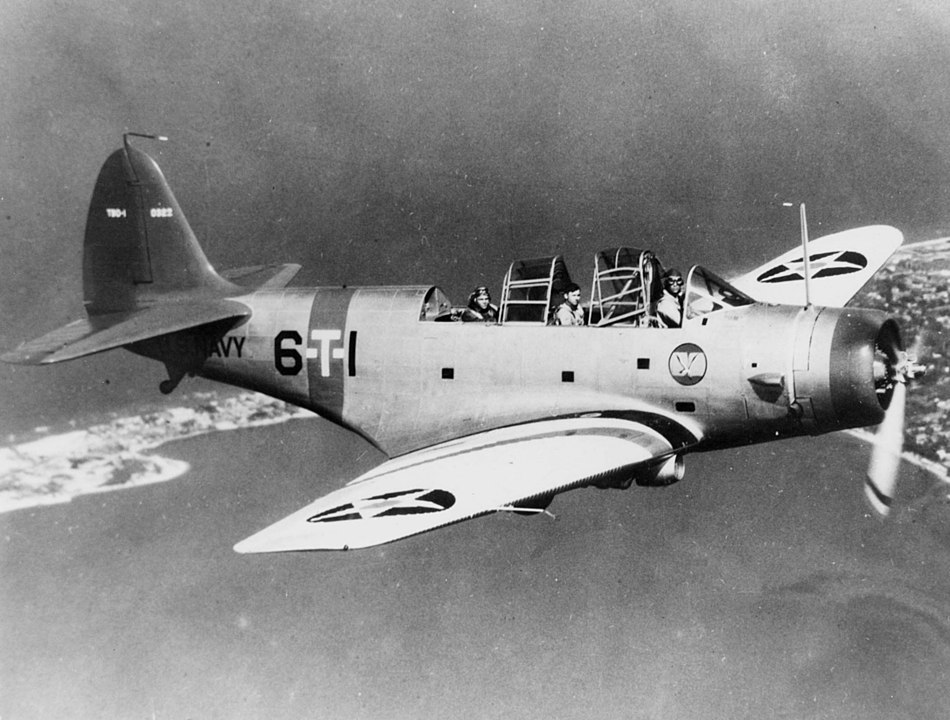
In the early days of the Pacific war, the TBD acquitted itself well during February and March 1942, with TBDs from Enterprise and Yorktown attacking targets in the Marshall and Gilbert Islands, Wake and Marcus Islands, while TBDs from Yorktown and Lexington struck Japanese shipping off New Guinea on 10 March. In the Battle of the Coral Sea Devastators helped sink the Japanese aircraft carrier Shōhō on 7 May, but failed to hit another carrier, the Shōkaku, the next day.

Faults were discovered with the Mark 13 torpedo at this point. Many were seen to hit the target yet failed to explode; there was also a tendency to run deeper than the set depth. It took over a year for the defects to be corrected. These problems were not fixed by the time of the Battle of Midway on 4 June 1942.

At Midway, a total of 41 Devastators, the majority of the type still operational, were launched from Hornet, Enterprise and Yorktown to attack the Japanese fleet. The sorties were not well coordinated, in part because Rear Admiral Raymond A. Spruance ordered a strike on the enemy carriers immediately after they were discovered, rather than spending time assembling a well-coordinated attack involving the different types of aircraft – fighters, bombers, torpedo planes – reasoning that attacking the Japanese would prevent a counterstrike against the US carriers. The TBDs from Hornet and Enterprise lost contact with their escort and started their attacks without fighter protection.

The Devastator proved to be a death trap for its crews: slow and hardly maneuverable, with poor armor for the era; its speed on a glide-bombing approach was a mere 200 mph (320 km/h), making it easy prey for fighters and defensive guns alike. The aerial torpedo could not even be released at speeds above 115 mph (185 km/h). Torpedo delivery requires a long, straight-line attack run, making the aircraft vulnerable, and the slow speed of the aircraft made them easy targets for the Mitsubishi A6M Zeros. Only four TBDs made it back to Enterprise, none to Hornet and two to Yorktown, without scoring a torpedo hit.

Nonetheless, their sacrifice was not completely in vain, as several TBDs managed to get within a few ship-lengths range of their targets before dropping their torpedoes, being close enough to be able to strafe the enemy ships and force the Japanese carriers to take sharp evasive maneuvers. By obliging the Japanese to keep their flight decks clear and to continually cycle and reinforce their combat air patrols, they prevented any Japanese counter-attacks against the American carriers, just as Spruance had anticipated. These windows of opportunity were exploited by the late-arriving Douglas SBD Dauntless dive bombers led by Lieutenant Commander C. Wade McClusky and Max Leslie, which dive-bombed and fatally damaged three of the four Japanese carriers about one hour after the first TBD torpedo attacks had developed. While the Devastators faced the stiff defenses of the carriers and their fighters, their attacks served to distract the Japanese attention from the Dauntless dive bombers' strikes, resulting in relatively lighter resistance from the IJN carriers' defensive fighter patrols, and more effective American attacks that crippled the IJN carrier forces.

The Navy immediately withdrew the 39 remaining TBDs from frontline units after the debacle at Midway. The surviving Devastators in VT-4 and VT-7 remained in service briefly in the Atlantic and in training squadrons until 1944. Many were relegated to training duties for pilots and mechanics or were destroyed following use as instructional airframes for firefighting training. By late 1944, no TBD Devastators were left in the US Navy inventory. The original prototype finished its career at NAS Norman, Oklahoma; the last TBD in the US Navy was used by the Commander of Fleet Air Activities-West Coast. When his TBD was scrapped in November 1944, there were no more. None survived the war and there are none known to exist on dry land today.

In fairness to the Devastator, the newer TBF Avengers were similarly ineffective in 1942, losing five out of six aircraft without scoring a hit during the Battle of Midway. The Avengers' only successes in 1942 would be against the light carrier Ryūjō and the battleship Hiei. In the initial part of the Pacific War, the poor performance of US torpedo bombers was due to the vulnerability of that type in general against fire from anti-aircraft artillery and defending fighters, plus the inexperience of American pilots and lack of coordinated fighter cover, as well as serious defects in US torpedoes which were not discovered and corrected until the fall of 1943. It took growing American air superiority, improved attack coordination, and more experienced pilots, before the Avengers were able to successfully accomplish their roles in subsequent battles against Japanese surface forces.. Wikipedia

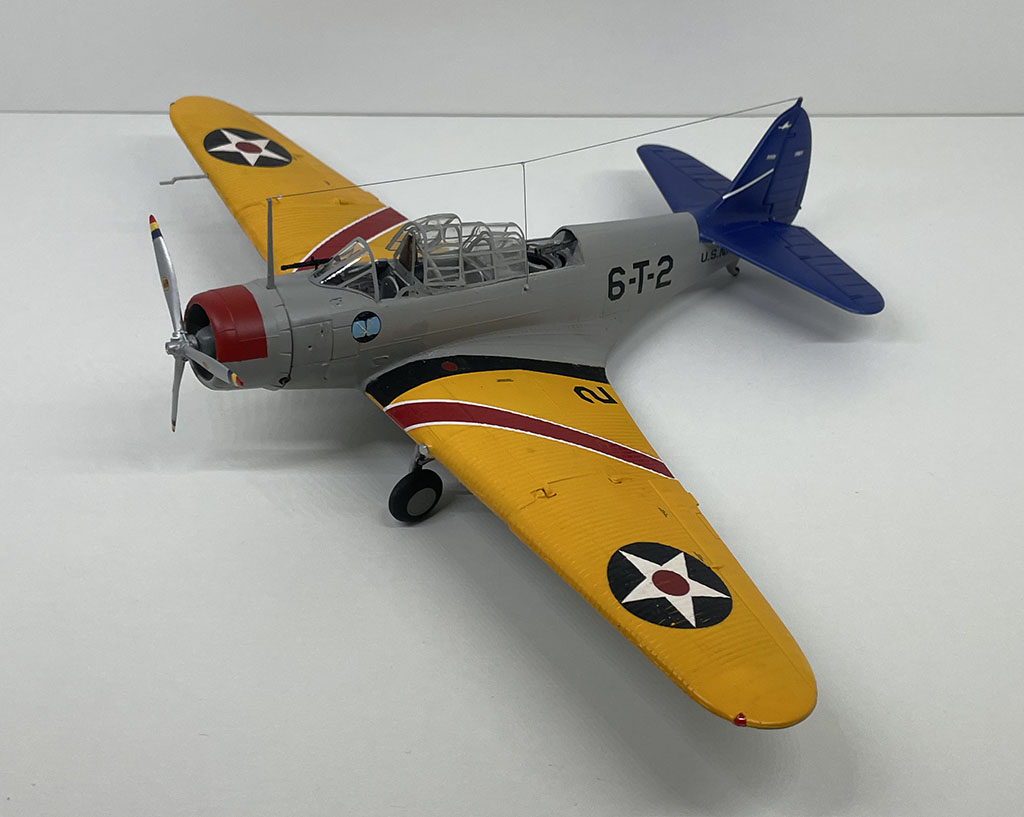
This model was produced by Revell and first came out in 1974.  This particular boxing came out in about 2003.  The plane is nicely detailed given it's age, but I had a lot of trouble with the decals as many of them would lift off at the slightest provication.  I had to paint the red diagional stripes on the top of the wings for this reason, but the yellow seemed to always peek through here and there.  I finally got decent resutls with repeated light coats.

I really like the yellow wing colors of this model and it will sit nicely with my other yellow wing a/c.
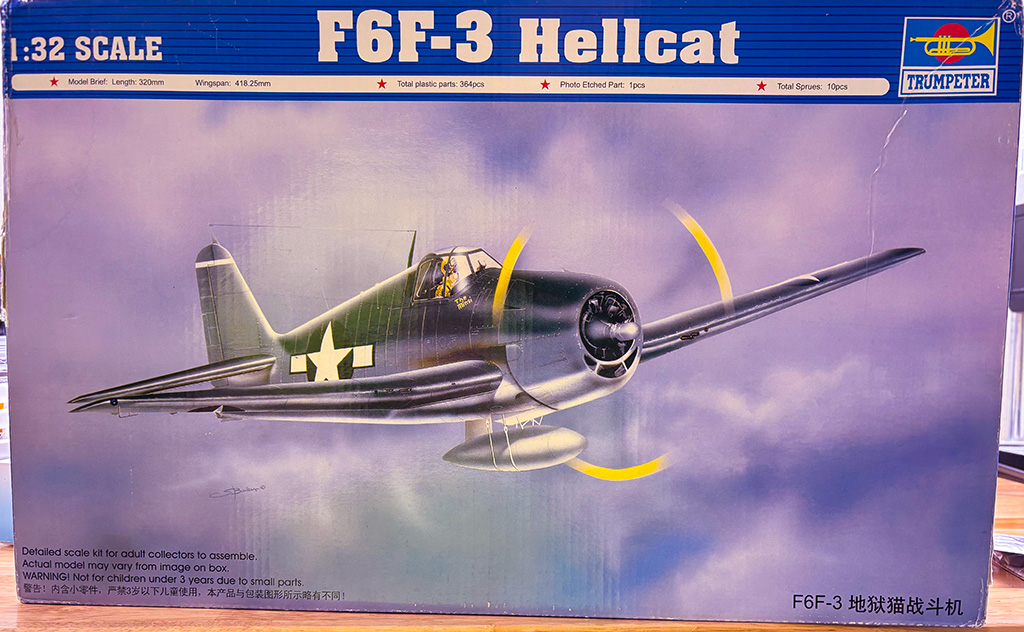
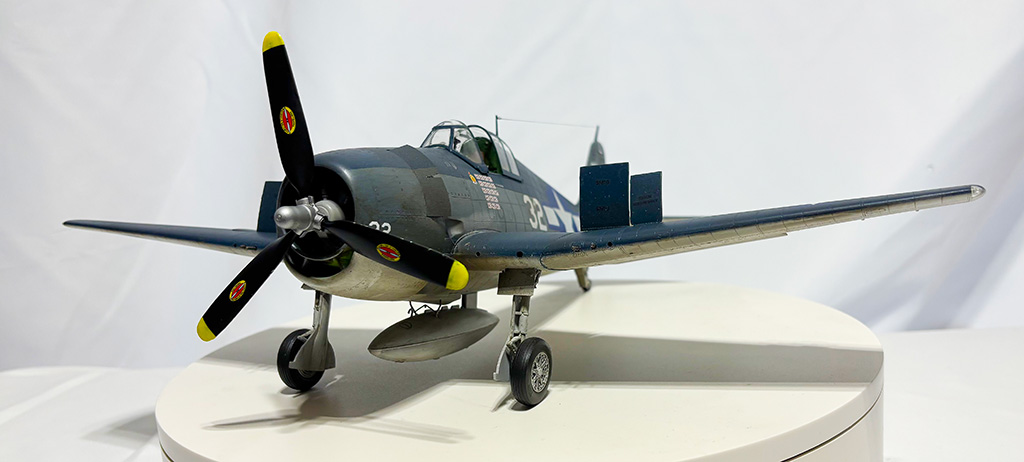
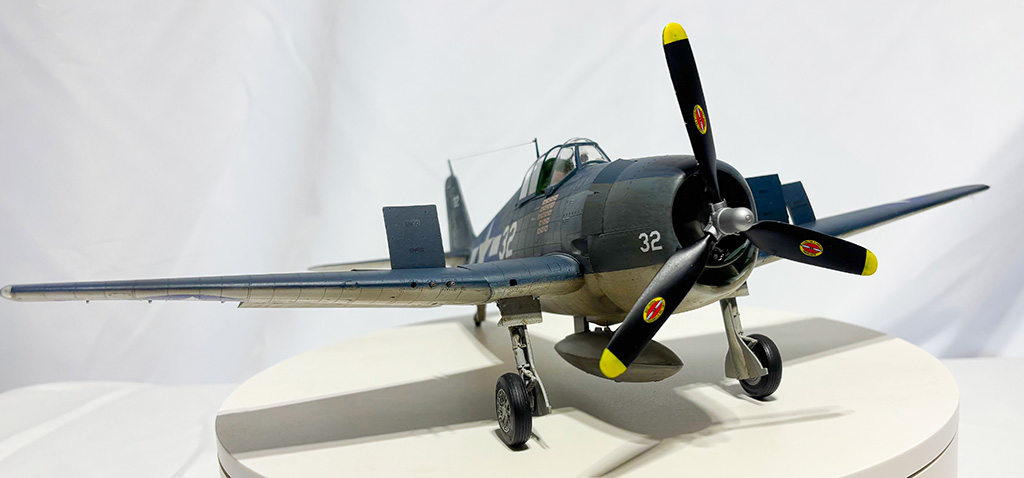
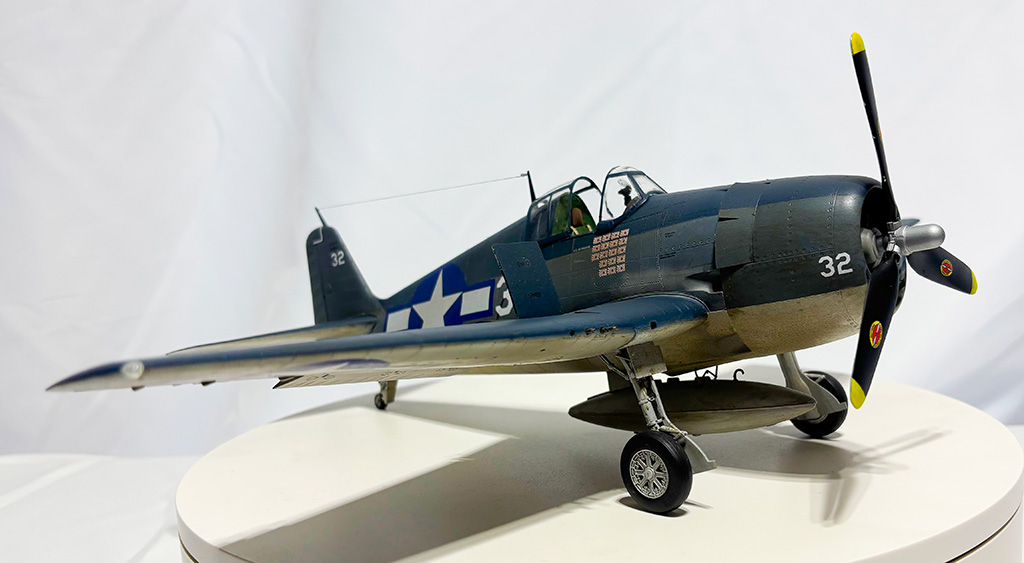
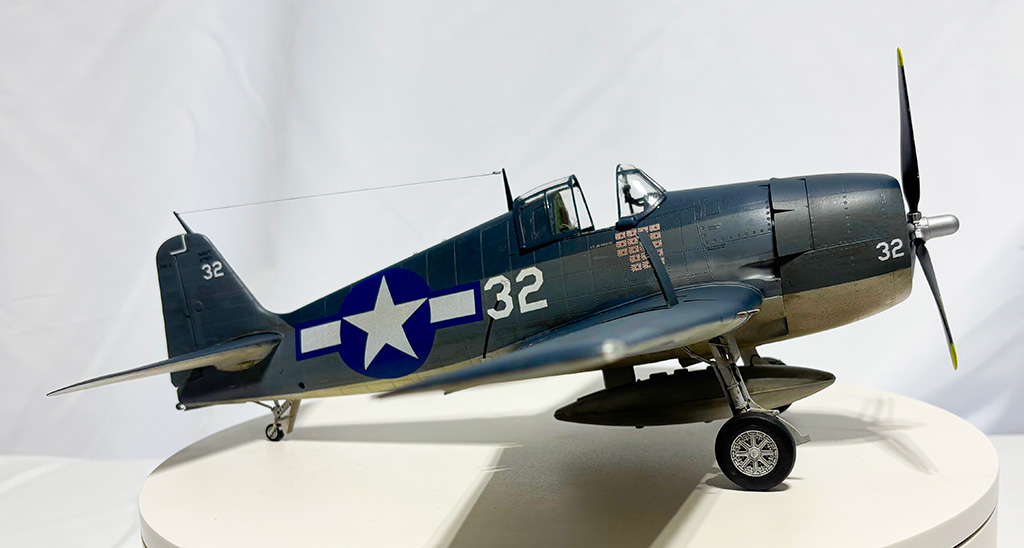
1/32 F6F-3

Posted by Paul On June - 27 - 2020

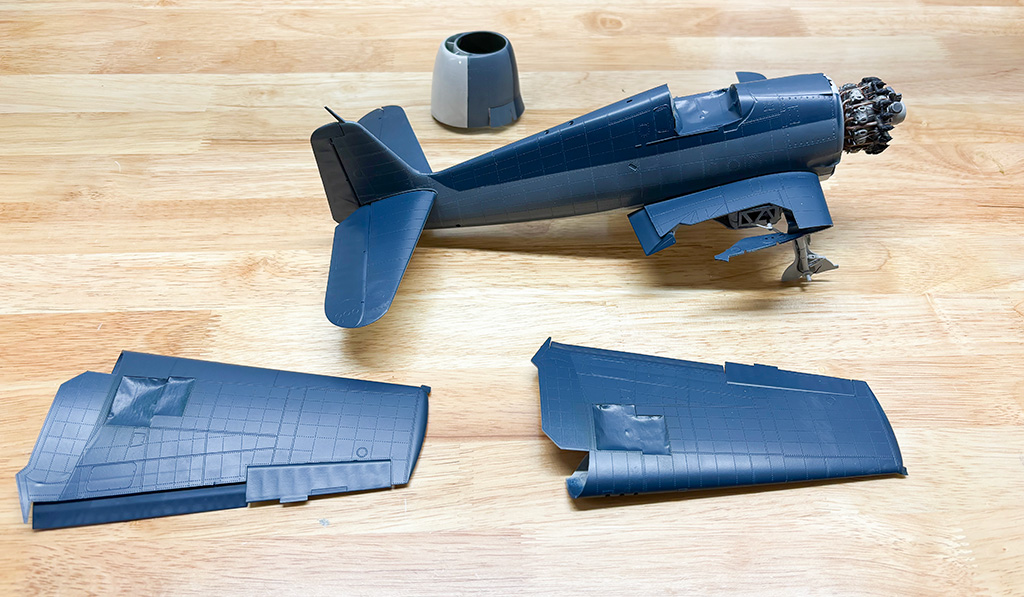
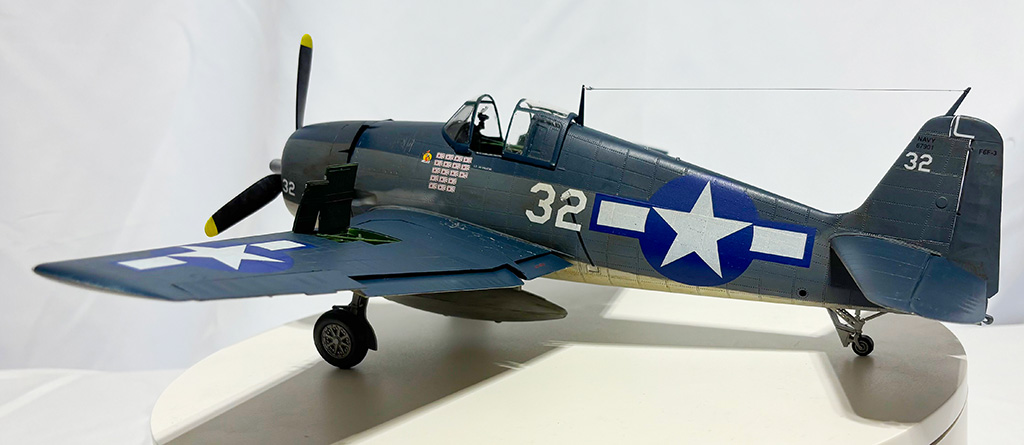
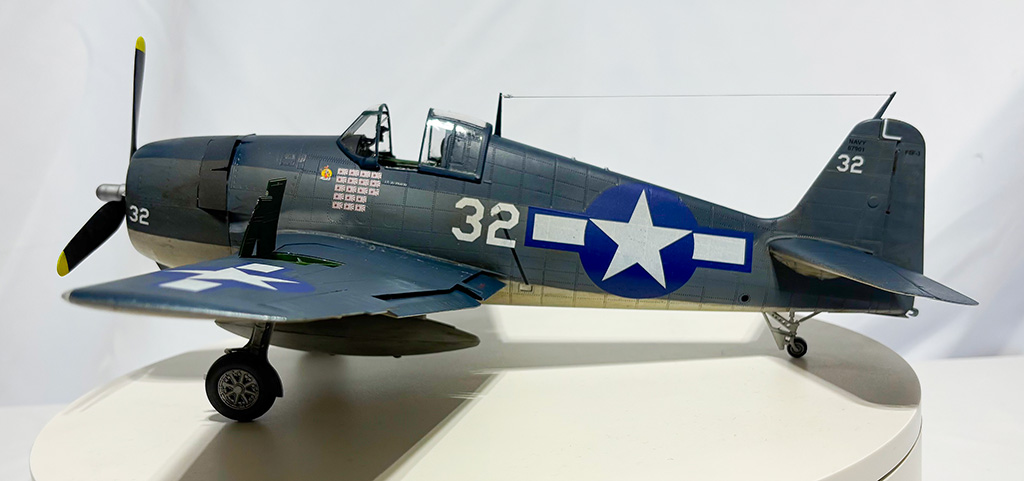
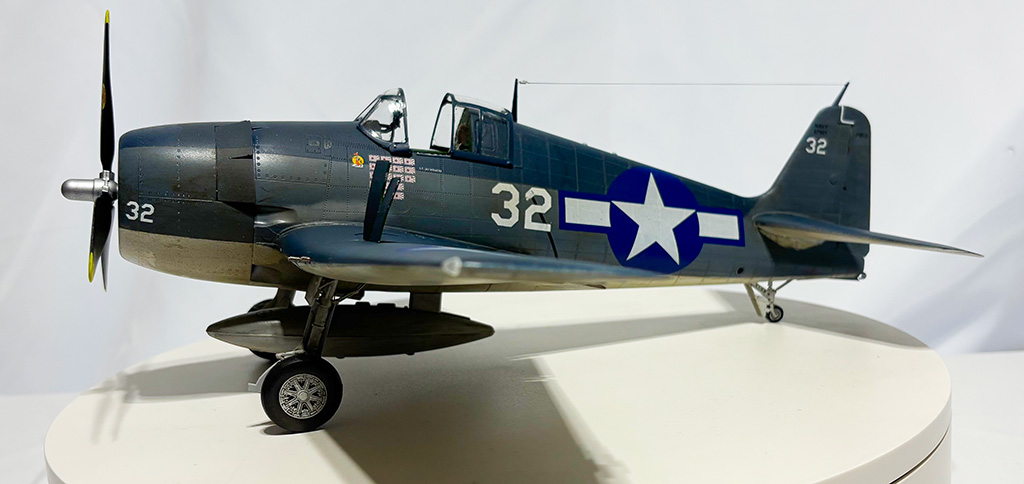
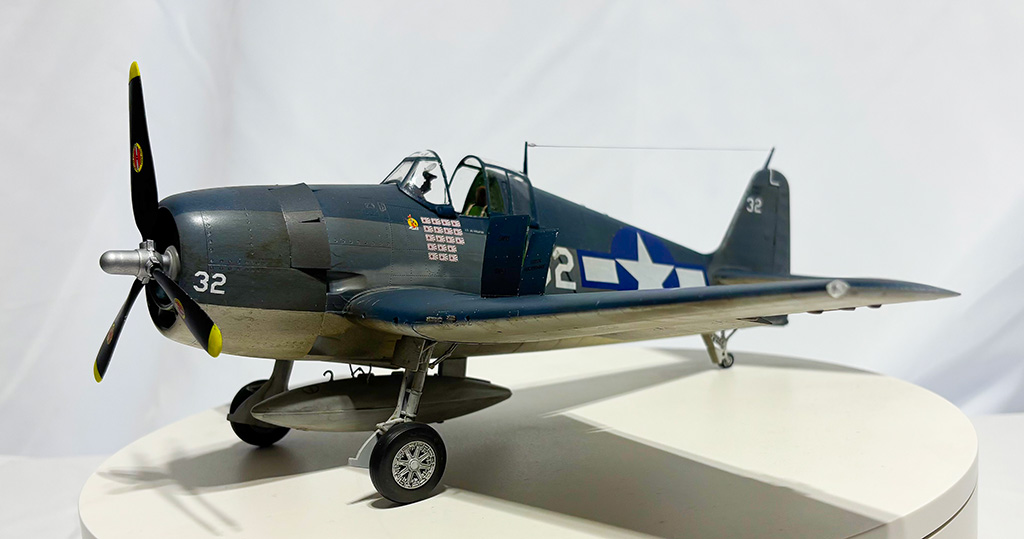
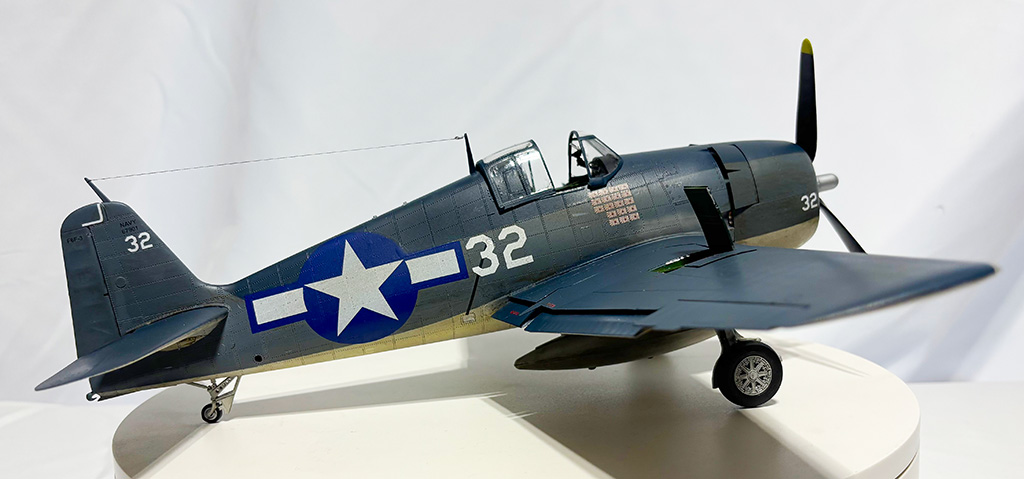
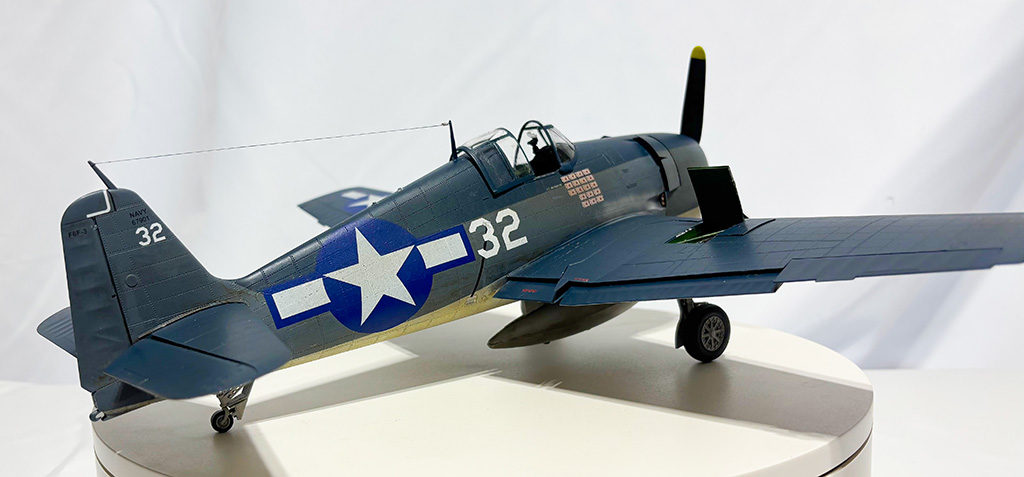
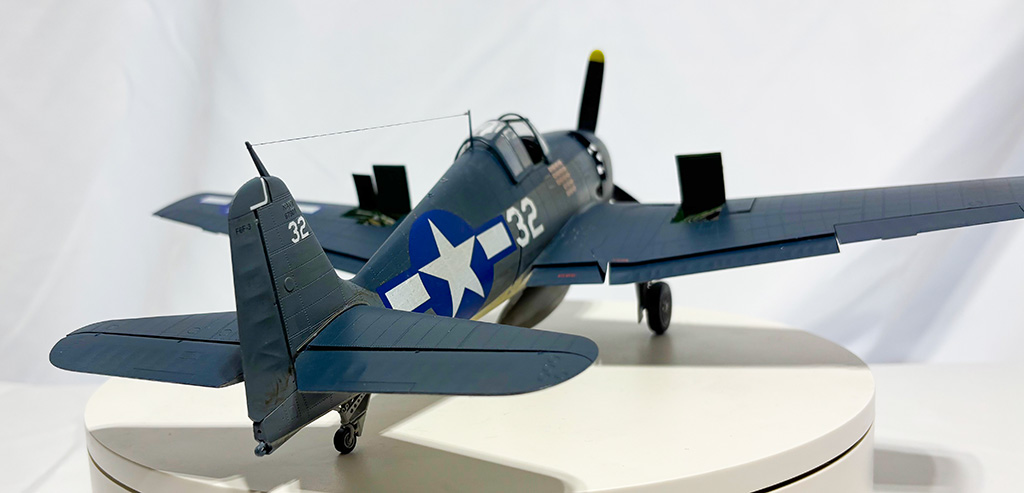
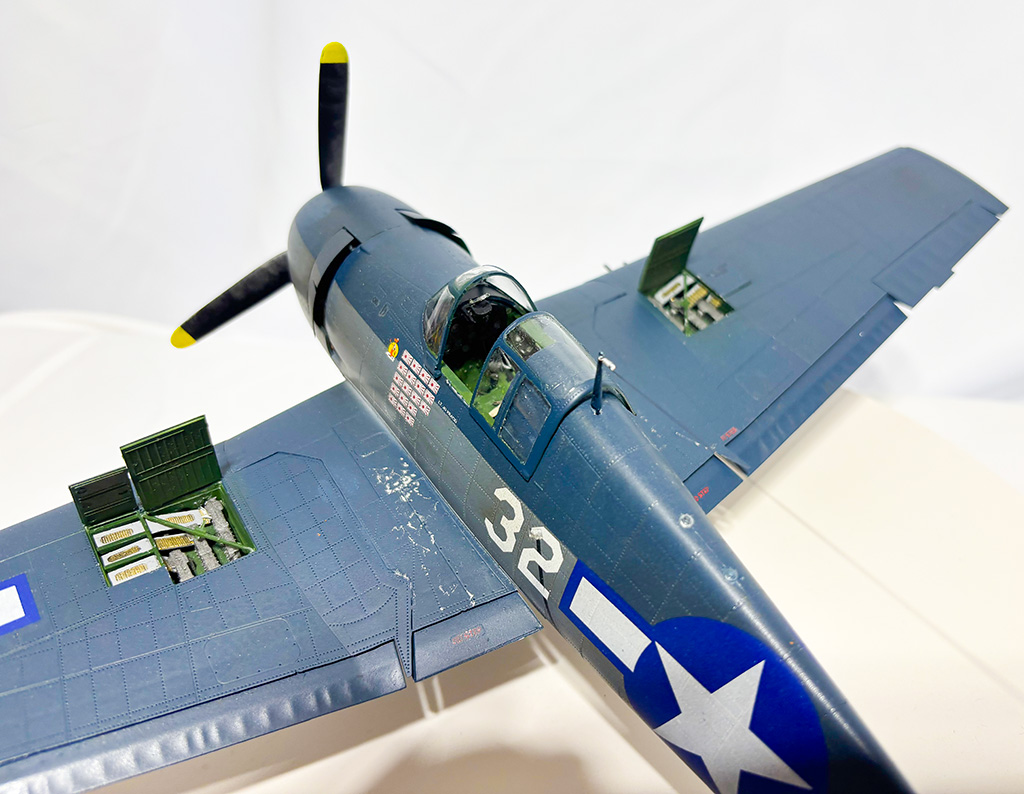
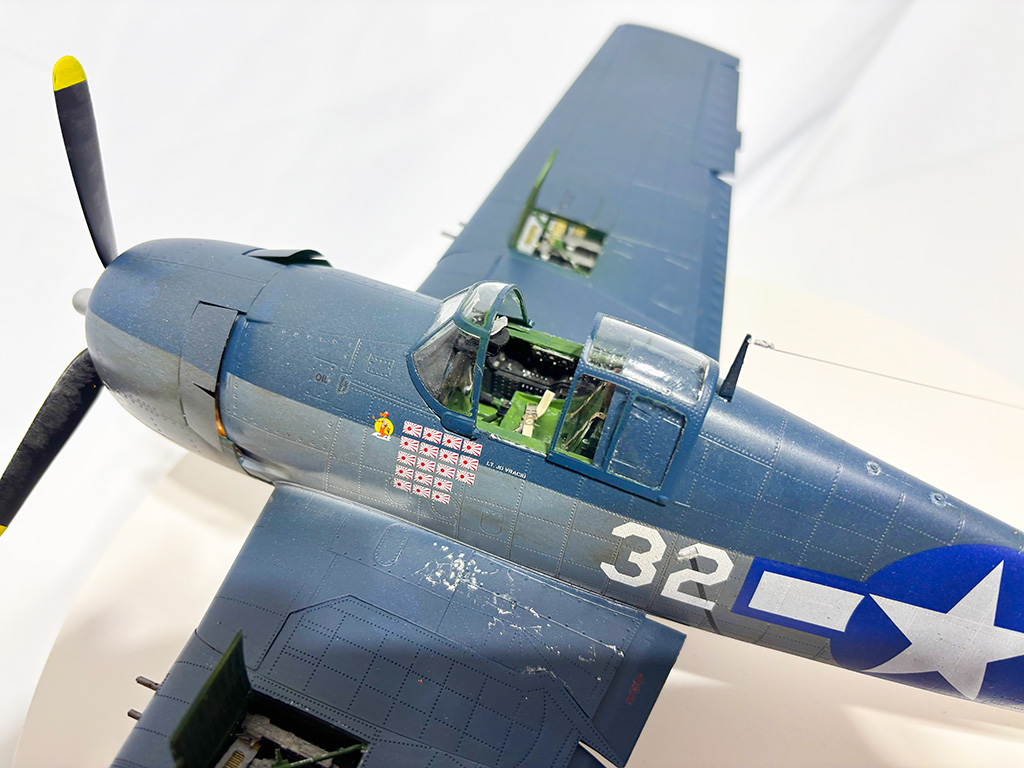
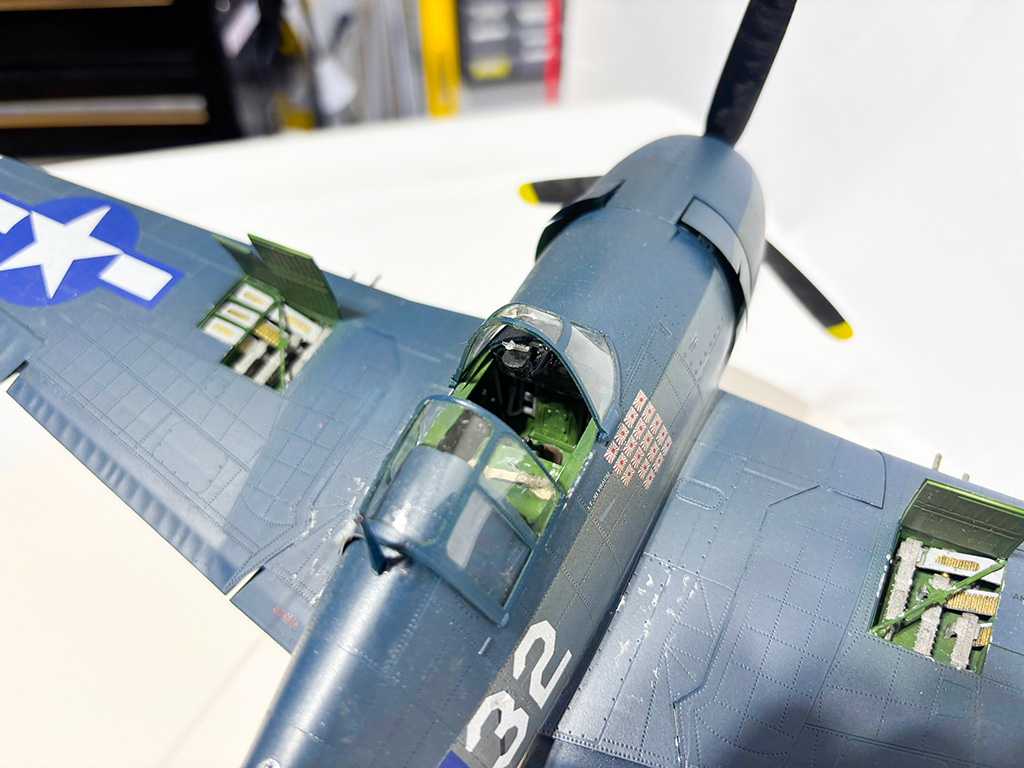
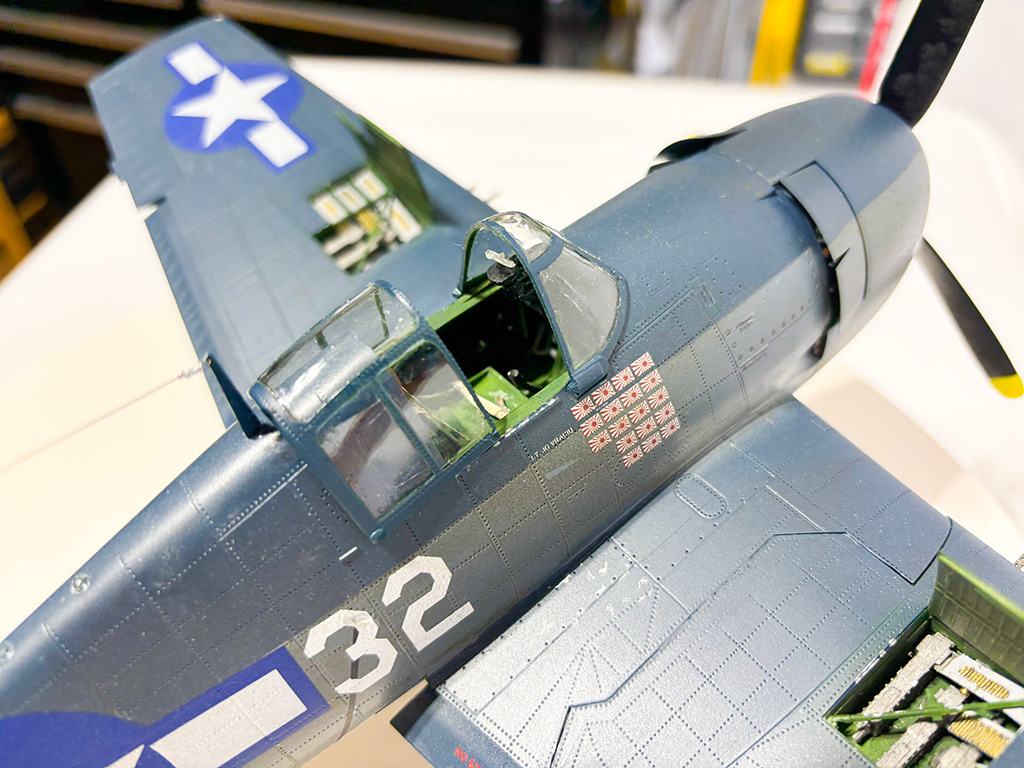
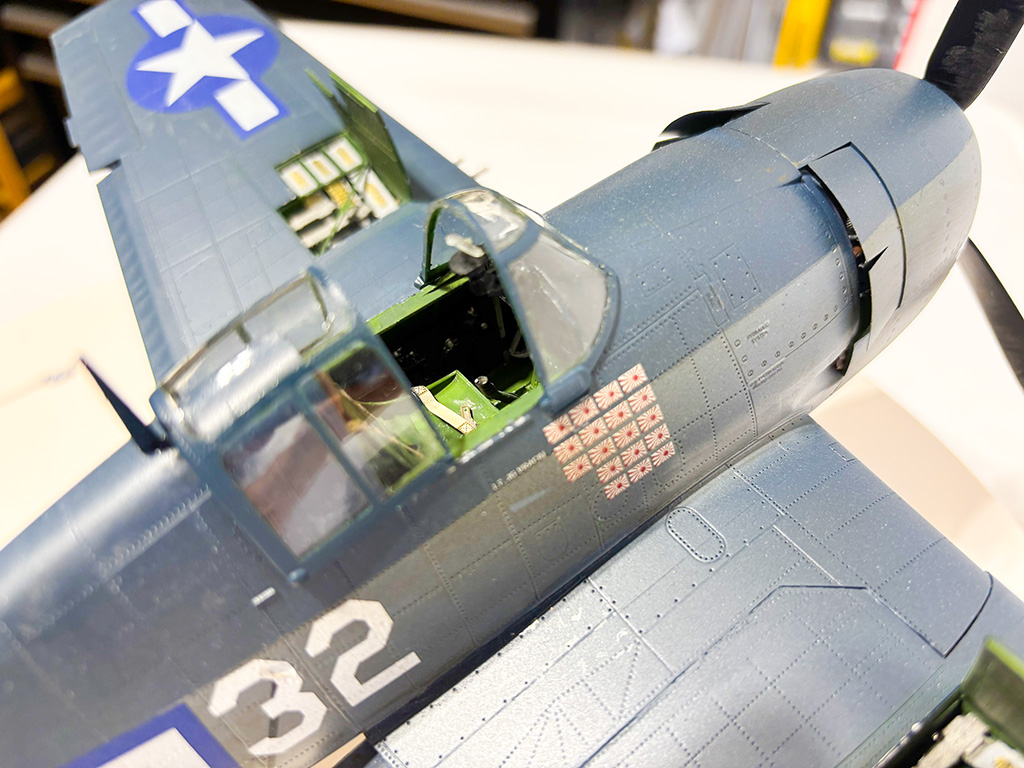
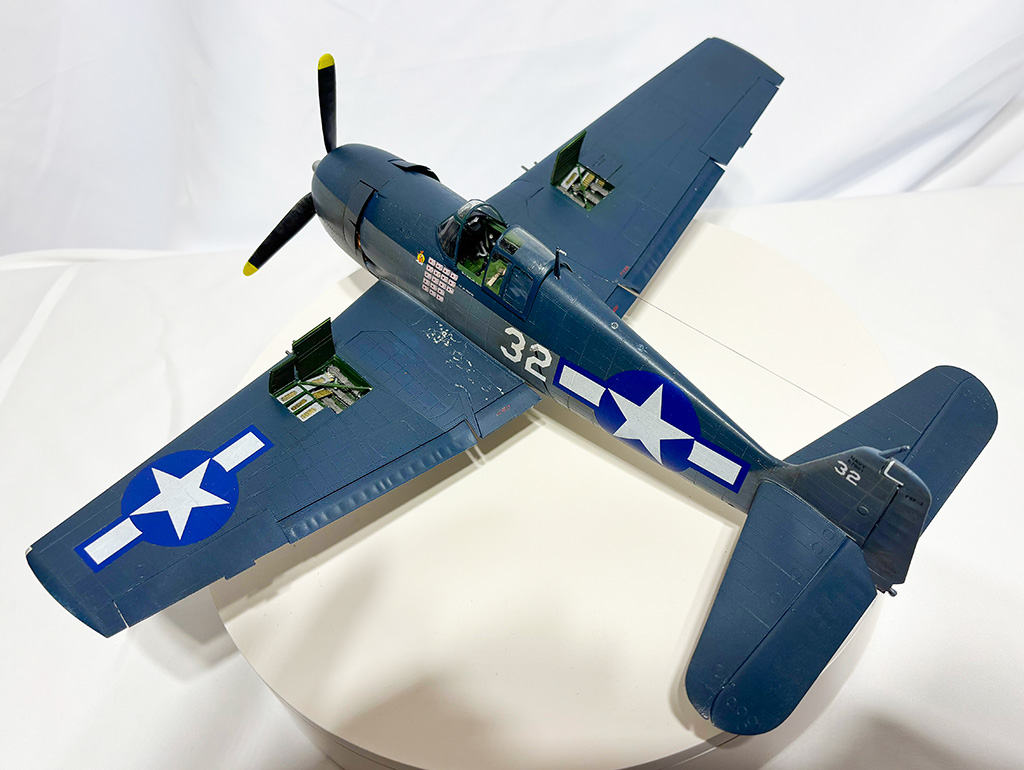
6/27/2025 Several days ago I started this F6F model from Trumpeter. 

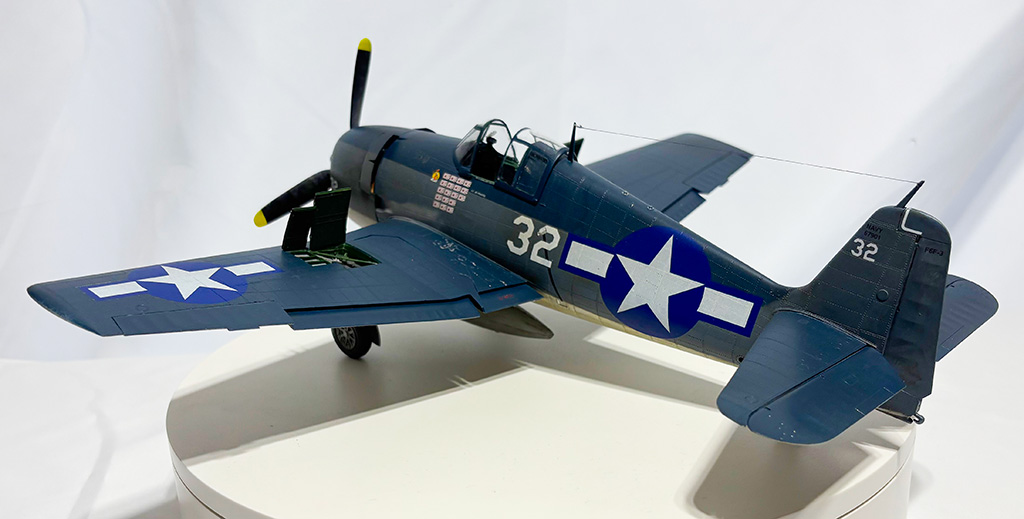
I will be building the plane that Alex Vericu flew when he had 18 victories.  Here is some background on him.

U.S. Navy fighter pilot Alex Vraciu downed 19 Japanese airplanes, but in the process lost three Hellcats, earning him a reputation as “Grumman’s best customer.”

U.S. Navy fighter pilot Alex Vraciu downed 19 Japanese airplanes, but in the process lost three Hellcats, earning him a reputation as “Grumman’s best customer.”
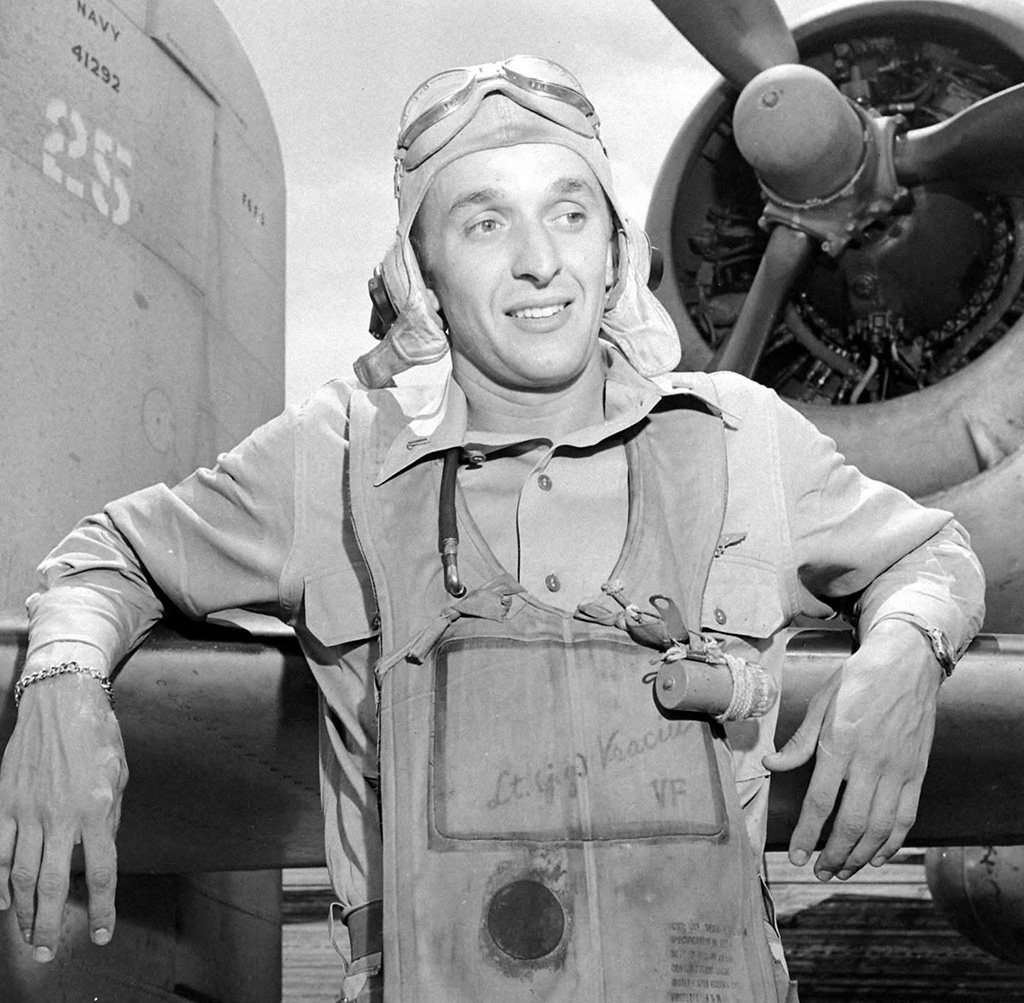
Lieutenant (j.g.) Alexander Vraciu was one frustrated fighter pilot. On June 19, 1944—the biggest day of air combat in the Pacific War—his Grumman F6F-3 Hellcat struggled to keep pace with the rest of Fighter Squadron 16. The “Fighting Airedales” had scrambled from the aircraft carrier Lexington (CV-16) in response to the second Japa­nese attack of the morning against Task Force 58, whose 15 carriers outnumbered the nine Japa­nese flattops.
Vraciu was already a double ace with 12 victories, and he was positioned to increase his score in a sky full of targets. But his Pratt & Whitney engine was stuck in low blower, depriving him of maximum speed and climb. He watched in frustration as his squadron mates pulled away to intercept incoming enemy bombers.
Unable to keep up, Vraciu led Ensign Homer Brock­meyer and another pilot back toward the task force. They established a “shortstop” orbit between the oncoming enemy and the U.S. carriers while other stragglers tagged along.
Vraciu radioed Lexington’s fighter director, requesting a vector in case some “leakers” got through the Hellcat picket line up ahead.
His efforts were rewarded. Lieutenant Joseph Eggert, controlling Task Group 58.3’s fighters, gave Vraciu’s bobtailed formation a westerly heading. Minutes later, peering through his oil-flecked windscreen, Vraciu’s hazel eyes saw “cookies on the plate.” He double-checked his armament switches and gunsight, and dived to the attack.

Alex’s Romanian parents, Alexandru Vraciu (rhymes with “cashew”) and Maria Tincu, emigrated to America with their families in 1906 and 1902, respectively. They met and married in East Chicago, Ind., and started a family with daughter Betty in 1917 and Alexander, born nine days before World War I ended.
Uncommonly bright, Alex entered DePauw University with a scholarship and graduated with a psychology degree in 1941, intent on pursuing his pre-med goal. But world events soon intervened.
Increasingly interested in aviation, Vraciu had enrolled in the Civilian Pilot Training program and earned his private rating in the summer of 1940. Immediately after graduation in June 1941 he enlisted in the Navy as an aviation cadet, beginning instruction in October.
Cadet Vraciu knew what he wanted: fighters. He had been inspired by the Royal Air Force’s performance in the Battle of Britain while he was mastering the Piper J-3 Cub. The shock of Pearl Harbor left lifelong scars: Beneath his pleasant exterior Vraciu, like millions of Americans, nurtured a fierce desire for revenge.
Ensign Vraciu received his gold bars and golden wings in August 1942. In 10 months he had logged 254 hours, including 89 dual instruction, typical for that period.

Assigned to fighters, Vraciu reported to the Great Lakes carrier qualification unit north of Chicago. There he learned the nuances of tailhook aviation, landing aboard USS Wolverine, a converted paddlewheel excursion vessel. He made the requisite eight traps without much drama, and began building time in Grumman F4F Wildcats.
Vraciu joined Fighter Squadron 3 (VF-3) in March 1943, the seminal event of his career. The squadron’s skipper was Lt. Cmdr. Edward H. O’Hare, one of America’s significant heroes in the first year of the war. “Butch” O’Hare received the Medal of Honor for a February 1942 mission defending the first carrier Lexington (CV-2) from Japanese bombers off Rabaul, New Britain. Credited with downing five Mitsubishi G4M1s (he actually destroyed three and one ditched), O’Hare was crowned the first Navy ace of the war.

Due to a realignment of Navy squadrons, VF-3 was redesignated VF-6 in July 1943. By the time O’Hare took the unit into combat that fall, Vraciu had logged nearly 700 hours—mostly in fighters—with 40 carrier landings. Flying O’Hare’s wing for five months, mastering the Hellcat while focused on tactics and gunnery, Vraciu was as prepared as he could be.
Fighting Six sent detachments to various carriers for increasing operations in October 1943. On the 5th, flying from the light carrier Independence, O’Hare led his four-plane division against the Japanese on Wake Island, with Vraciu leading the second pair. O’Hare spotted three Mitsubishi A6M Zeros approaching the island and immediately attacked. While O’Hare flamed the Japanese leader, Vraciu tied into the right-hand wingman, sending it down afire. “It felt damned good,” Vraciu later said. He had begun his personal payback for Pearl Harbor, strafing two grounded planes for good measure.
Vraciu’s next chance came on November 20, as Navy carriers supported the Marine landings on Tarawa. He downed a G4M2 “Betty,” almost as a parting tribute to O’Hare, who had transferred to the carrier Enterprise as air group commander.

A week later the sky fell in.
On November 26 Butch O’Hare disappeared during a night intercept in the Gil­berts. Contra­dictory reports circulated for years, but one thing was known: The Betty, which featured in the rise of the O’Hare legend, was involved in his demise as Japanese bombers probed U.S. defenses. Sick at heart, Vraciu became a devoted hunter of Bettys. He told his wingman Willie Callan that he intended to slay 10 G4Ms as payback.
Vraciu’s next engagement fitted his ambition. On January 29, 1944, flying from Intrepid, Vraciu tied into a gaggle of Bettys over Roi Island in the Marshalls and chased down three. He splashed the last with one .50-caliber firing. It was his ace-making mission.
Vraciu was competitive as an ace and maxi­mized his opportunities. Of his 19 victories, 15 were scored in multiples. But he recalled the broader atmosphere of the time. “You didn’t always know who the top scorer was,” he said. “You’d go out, fly some hops and maybe get some victories, and return to the fleet base. Then you might hear who had done something but it wasn’t always current.” When Vraciu bumped his score into double digits he passed the reigning carrier ace, Lieutenant Hamilton McWhorter of VF-9, but Lieutenant Ira Kepford of the land-based VF-17 retained the Navy record well into 1944.
Intrepid’s next stop was vaunted Truk Atoll in the Carolines, Japan’s major naval air base in the central Pacific. Five carriers launched 72 Hell­cats, initiating one of the classic dogfights of the war. As Vraciu prepared to dive on Truk with Ensign Lou Little, he recalled O’Hare’s advice and checked his 6 o’clock. Several Zeros had altitude and position, and one was firing. Vraciu called a warning and turned into the threat. Confusion permeated the cloud-flecked sky as one Hellcat shot another into the water. But in the frantic, twisting combat Vraciu expertly gunned three Zekes and a Nakajima A6M2-N Rufe floatplane, raising his tally to nine. Then he handed off a Zero to Little, who added to the squadron’s 16 kills that day.
The Japanese, however, were persistent. That night a Nakajima B5N2 sent a torpedo into “Evil I,” knocking Vraciu from his bunk. He reported to the ready room, where he found some frantic pilots kneeling in prayer. Intrepid survived but was out of action until September.
Still eager for combat, Vraciu transferred to VF-16 aboard the second Lexington, the TF-58 flagship of Vice Adm. Marc Mitscher. During the March runup to strikes against Palau, Vraciu volunteered for a maintenance check flight from “Lex.” When his engine quit in the traffic pattern, he ditched the ailing Hellcat. His Mae West life jacket malfunctioned but he treaded water until sailors hauled him aboard a destroyer.
The fast carriers struck Truk again on April 29, and Vraciu rounded out his G4M collection with his fifth Betty. Though halfway to his goal, apparently he never saw another airborne Betty. On another mission that day, however, Japanese flak tagged his Hellcat, compelling him to ditch again. The skipper of the rescuing destroyer offered the ace his own cabin.
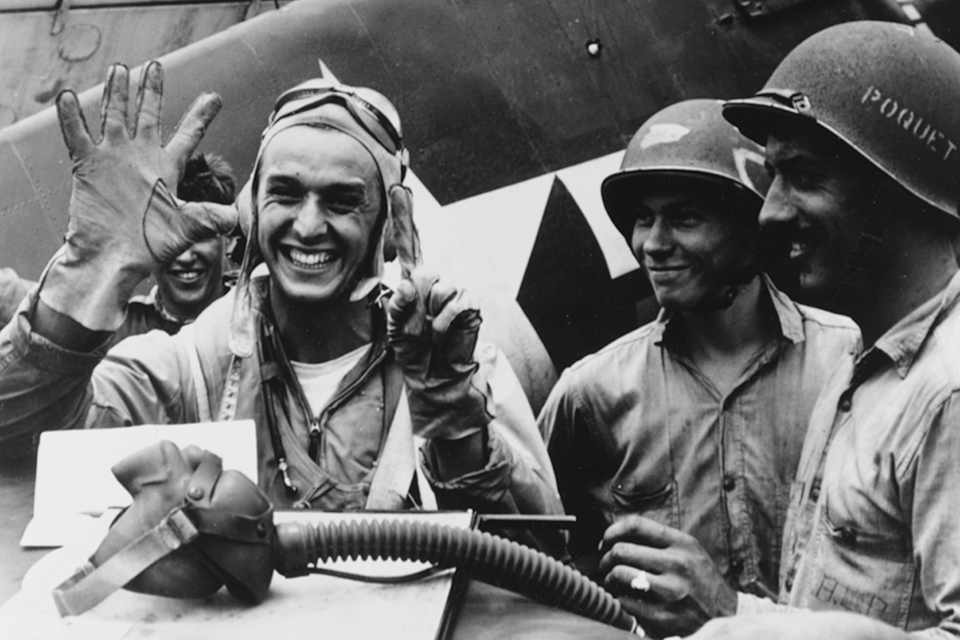
West of Saipan on June 19, Vra­ciu’s interception of Yokosuka D4Y1 dive bombers quickly entered legend. In a sizzling eight minutes he gunned six of the Judys, chasing the last one into the American flak zone. When he landed aboard Lexington he was greeted by a crowd, including a photographer who snapped one of the war’s iconic images: Vraciu holding up six fingers. He was now the Navy’s top-ranked fighter pilot, with 18 kills, edging out Corsair pilot “Ike” Kepford in the Solomons.

On deck, Vraciu received two revelations. First, his Hellcat’s “pins” partly protruded from the top of the wings. He had flown the mission with his wing-fold mechanisms only partly engaged. Then ordnance men unloaded the six .50-calibers and counted the remaining ammunition. Vraciu had only fired about 360 rounds for his six victories—an average of 10 rounds per gun per kill. Better marksmanship was only theoretically possible.

Though the Imperial Japanese Navy had sustained grievous losses—more than 300 aircraft plus two carriers sunk by U.S. submarines—the battle continued the next day. Late that afternoon TF-58 launched 220 aircraft on the longest strike to date, seeking to overtake the retreating enemy. Vraciu was one of VF-16’s escorts protecting Lex’s SBD-5 Dauntless dive bombers and TBF-1 Avenger torpedo planes when Zekes descended on the formation, swarming the Hellcats. Out­numbered eight to three, Vraciu weaved violently with Homer Brock­meyer, and recalled, “We were totally defensive.”
In the cut and thrust dogfight, Vraciu gained a frontal angle on one Mitsubishi and led it from 10 o’clock, sending a lethal burst into the bandit. Brockmeyer went down streaming smoke, never seen again.
Belleau Wood’s Avengers sank the light carrier Hiyo, then the U.S. planes turned for home, 300 miles away. In a moonless sky they navigated through the darkness to TF-58, where chaos reigned. Admiral Mitscher allowed almost every ship to light up, confusing pilots as to which were carriers. Vraciu was an expert fuel manager and reckoned he had time to let things settle down. Finally he landed aboard Enterprise, but the losses were not finished. Next morning, returning to Lexington, he saw one of his squadron mates stall out of a turn and dive into the sea.
Air Group 16 finished its deployment in July, and Vraciu headed home. Upon his return to East Chicago, the Navy’s leading ace was honored with a lavish ceremony including a three-hour tribute at the city stadium. His eldest son Robert described what happened next:
“Following the ceremony, Dad’s honoring continued with a motorcade through East Chicago. Along the way, women and girls offered hugs and kisses. The route took him past my mom’s house where her sister (still a teenager) was on the front porch. Dad got out of the car and went up to Margaret. Apparently she told him, ‘You don’t want me, you should see my sister. She’s in the backyard.’ He went and met her.”
Kathryn Horn was a vivacious brunette five years Vraciu’s junior. “She apparently made an impression because Dad returned to her house that night,” Bob continued. “She was at the movie theater and her younger brothers went and got her to come back home. Mom was engaged and Dad asked her, ‘Is it serious?’ Apparently not, since my folks were married two and a half weeks later!”
The newlyweds had little time together. After their September wedding Vraciu returned to the Pacific rather than endure a bond-selling tour. Hitchhiking westward to rejoin Lexington, he knew that Commander Hugh Winters’ Air Group 19 had replaced Air Group 16. But upon reaching Ulithi Atoll in the Carolines, Vraciu found that Air Group 20 had just reported aboard the carrier. The fighter skipper was Lt. Cmdr. Fred Bakutis, who was delighted to have him. Bakutis valued Vraciu’s combat experience, which by then encompassed 1,100 hours and 140 traps.
Task Force 38 sortied in December, supporting Army operations in the Philippines. Now a full lieutenant, Vraciu flew two missions on the 14th, strafing Japanese facilities around Manila. On the second flight his F6F-5 took antiaircraft fire, and he had to ring up the for-sale sign for the third time. (“I was Grumman’s best customer,” he noted.) Vraciu parachuted safely and was scooped up by friendly Filipinos. Fleeing the area, the guerrillas occasionally picked up the American to carry him around booby traps.
Back in East Chicago, Kay Horn Vraciu endured a dismal holiday season. In one week her husband was reported MIA and her brother died. She had lost her father the previous Christmas.
Vraciu spent the next six weeks with Allied forces, gathering information and evading Japa­nese searchers. When the guerrilla leader fell ill, Vraciu’s seniority put him in command of some 180 fighters. He returned to U.S. control in mid-January, when a general’s aide recognized a fellow DePauw graduate. The staffer ensured that Kay and the family learned the welcome news as soon as possible.

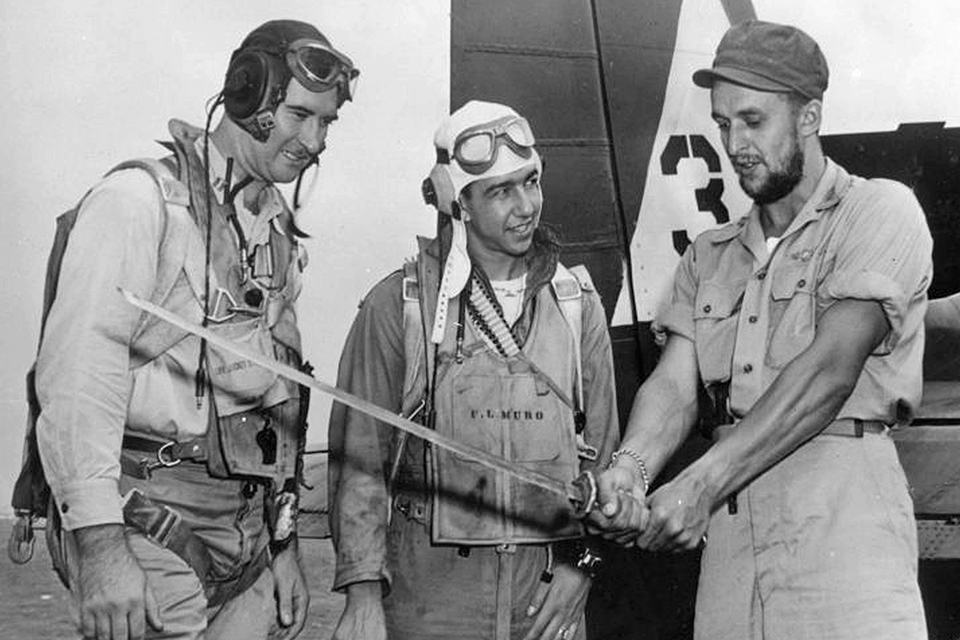
Lieutenant Vraciu briefly returned to VF-20 sporting a full beard and a Japanese sword and pistol. But since he had been on the ground behind enemy lines, regulations prevented him from returning to combat.
Vraciu had been recommended for the Medal of Honor for four noteworthy missions in June 1944, but for unknown reasons the proposed citation only mentioned June 19. In the context of other ace-in-a-day records, he received the Navy Cross, and though postwar supporters tried to revive the Medal of Honor, all efforts failed. His decorations also included three Distinguished Flying Crosses and four Air Medals.
Vraciu drew a plum postwar assignment: tactical evaluation at the Patuxent River, Md., flight test center. He was among the first fleet pilots to fly the sensational Grumman F8F Bearcat, and he reveled in its performance. On one Pax River flight he indulged in some unauthorized hassling with an F7F Tigercat, ending in a draw. Back at operations, Vraciu asked, “Who’s in the F7?” The ops officer replied, “Oh, Lieutenant Colonel Carl.” Thus did Alex Vraciu meet Marion Carl, Marine Corps triple ace and future owner of the world speed record.
Vraciu rolled out in September 1945, beginning a lengthy role in building the Naval and Marine Air Reserve program. There was work aplenty in the postwar era, and he remained with the Reserves until 1951.
Subsequently Vraciu became a jet training officer at Naval Air Station (NAS) Los Alamitos and attended naval post-graduate school. He received a Regular commission in 1954, making commander in August 1955. Meanwhile, he became USS Hornet’s communications officer from December 1954 to February 1956. Hornet was one of several Essex-class carriers to be modified with an angled flight deck, a time-consuming process. While it was in the yard Vraciu received a call from a friend in personnel. VF-51 at NAS Miramar near San Diego needed a new skipper, and Vraciu was offered the slot. He leapt at the opportunity, assuming command in March 1956.
Flying FJ-3 Furies, the “Screaming Eagles” prepared for the annual aerial gunnery meet at El Centro, Calif., in January 1957. It was the highlight of every fighter squadron’s year.
Vraciu probably had not shot an aircraft’s guns since 1945, and the run-up to the meet allowed precious little time for practice. But he flew several “dry” flights tracking towed targets and felt confident in the lead-computing sights and in himself.
The Screaming Eagles missed their schedule due to weather, compensating with four flights the next day. Vraciu’s executive officer was another Hellcat ace in a day, Lt. Cmdr. Willis Hardy. He recalled that Vraciu had the squadron’s gunsights removed from their Furies to prevent any untoward problems.
The base newspaper reported: “Led by the sensational shooting of the team skipper, Cdr. Al Vraciu, VF-51 overcame a 107-point penalty and edged ahead of the Marines from VMF-314 of MCAS El Toro, Calif., in yesterday’s air-to-air action. A low murmur ran through the crowd that had formed around the tally board when the scorekeeper chalked up a meet high score of 428 points for Cdr. Vraciu on his second 15,000-foot hop. The score boosted his overall total to 1,760 as he jumped from fifth to a strong first place in the individual scoring standings.”
Vraciu finished ahead of Lt. (j.g.) Charles “Pete” Conrad, a future astronaut, for individual honors, but the El Toro Marines pulled out a last-minute team victory. Additionally, the squadron ordnance shop set a record for the highest weapon reliability figure yet seen.
Back to work, VF-51 deployed to the western Pacific in Bon Homme Richard during the second half of 1957. Vraciu left the squadron in January 1958 after 22 months as Screaming Eagle One.
Vraciu became the public affairs officer at Alameda, continuing to fly when he could. But he hung up his helmet in October 1962, after 3,550 hours and 141 carrier landings. He retired on Janu­ary 1, 1964, and pursued banking for 30 years.
Alex and Kay had three daughters and two sons—their youngest named Marc for Admiral Mitscher. Robert served in the Army Reserve and became a healthcare doctor, recalling, “Dad never pushed any of us into a military career.”
Kay died in 2003 after a lengthy illness in a care facility, but Alex nearly always fed her at least one meal a day.
Alex Vraciu died at age 96 on January 29, 2015. Among the online tributes was one from George Wolf, a VF-51 sailor who recalled: “I served under Commander Vraciu and was one of the 30 team members when he won the weapons meet at El Centro. I went on to serve 30 years and can’t say I met a man I admired more than Cdr. Vraciu….
He was a truly great man.”
Frequent contributor Barrett Tillman is a naval aviation expert who has authored more than 40 books and 750 articles. In October 2018, NAF El Centro announced that its airfield would be named Vraciu Field in honor of the ace, with a dedication ceremony in March of this year. Further reading: Hellcat: The F6F in World War II and Hellcat Aces of World War II, both by Tillman.
This feature originally appeared in the May 2019 issue of Aviation History. 

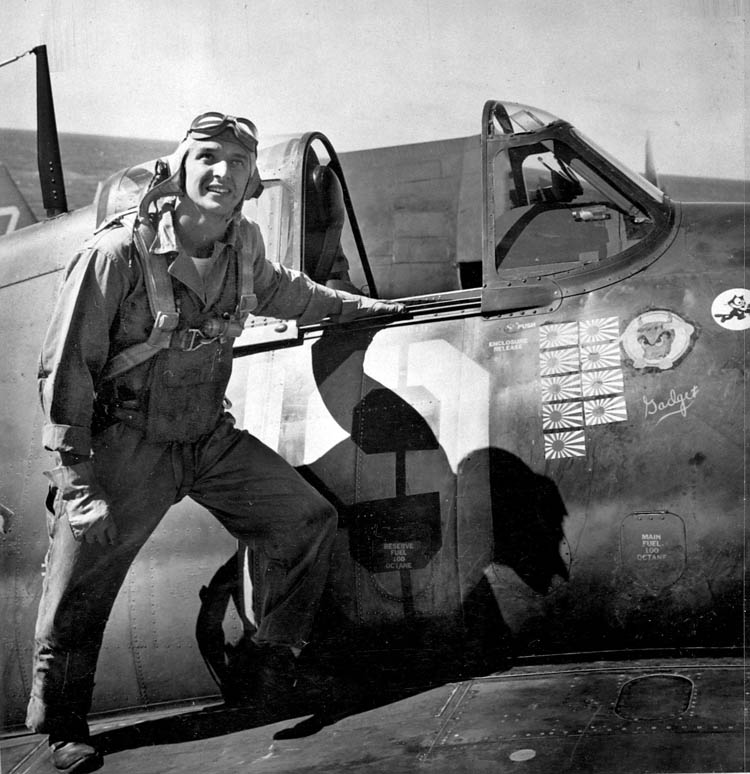
U.S. Navy fighter ace Alex Vraciu stands next to the cockpit of his Grumman F6F Hellcat fighter plane prior to a mission. On the Hellcat’s fuselage are rising sun emblems representing nine confirmed aerial kills. Vraciu finished the war with 19 victories.

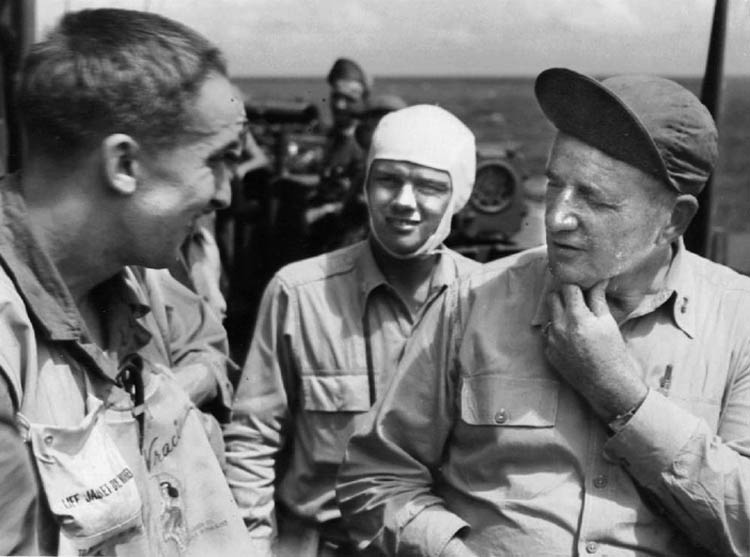
Fighter pilot Alex Vraciu, left, with Vice Admiral Marc Mitscher.

Vraciu holds up six fingers to signify his victories on June 19 during what came to be known as the “Great Marianas Turkey Shoot.” (U.S. Navy) 

Lieutenant Vraciu shows off a captured Japanese officer’s sword to fellow Navy pilots aboard a carrier after his return from behind enemy lines on Luzon. After his Navy fighter was downed by antiaircraft fire over the Philippines, Vraciu joined a band of guerrillas and participated in operations against the enemy.

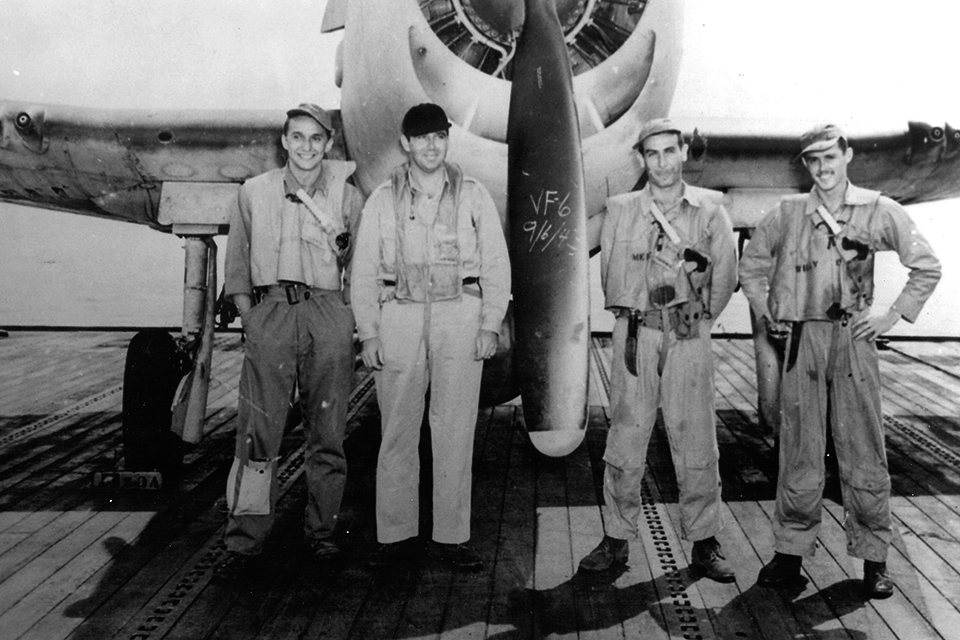
While serving with VF-6, Vraciu (left) learned his trade from Medal of Honor ace Edward “Butch” O’Hare (second from left). (Courtesy of David Sears)

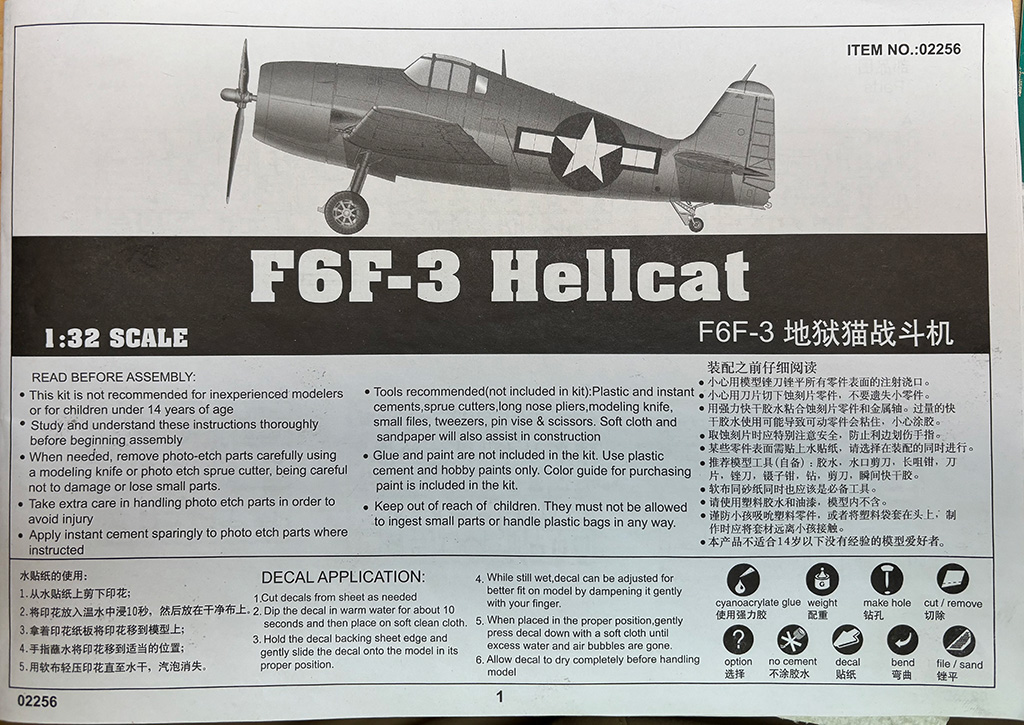
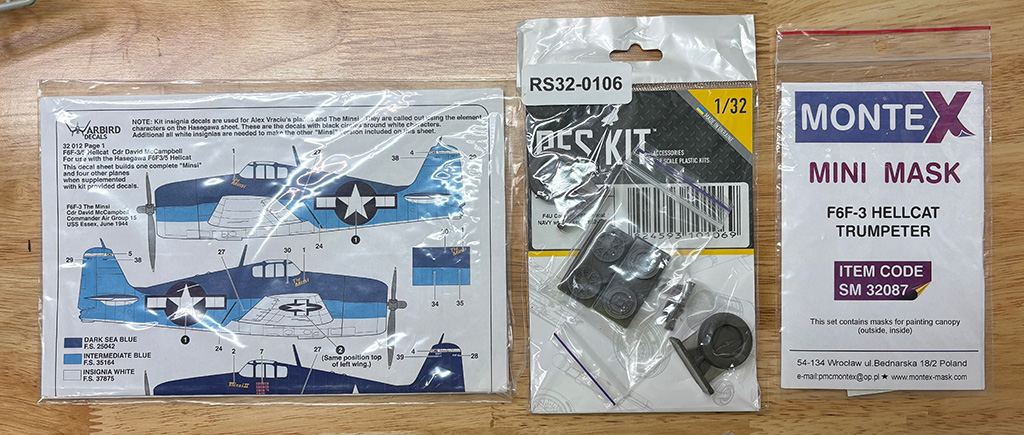
 I have always loved this aircraft and I've built two in 1/48 scale.  So far Trumpeter is the only option for 1/32 scale – so here we go.  I have purchased some aftermarket items – Montex masks, wheels by Reskit and decals by Warbird.

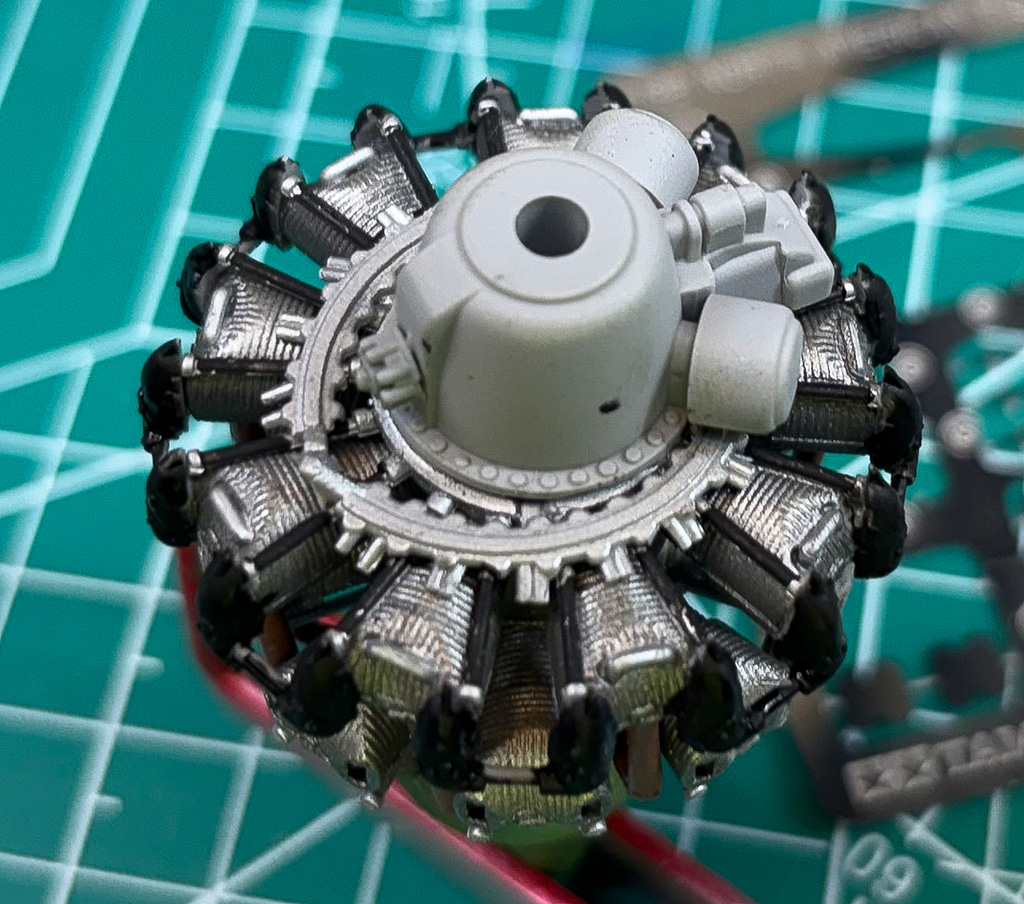
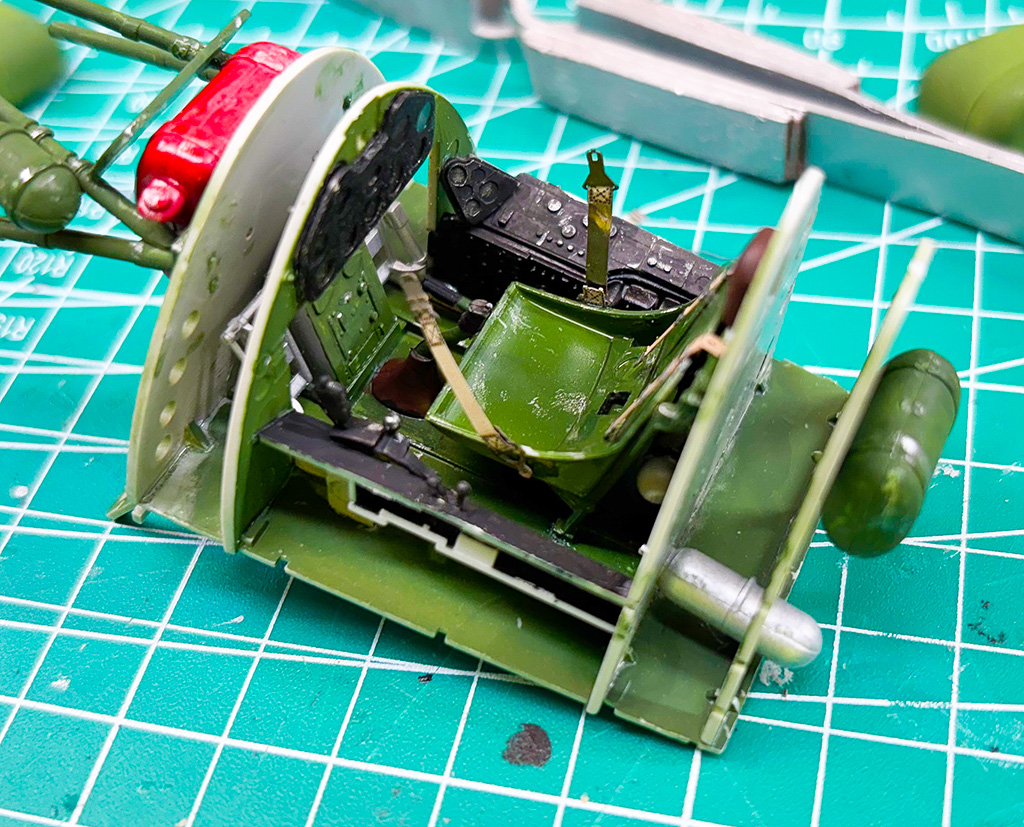
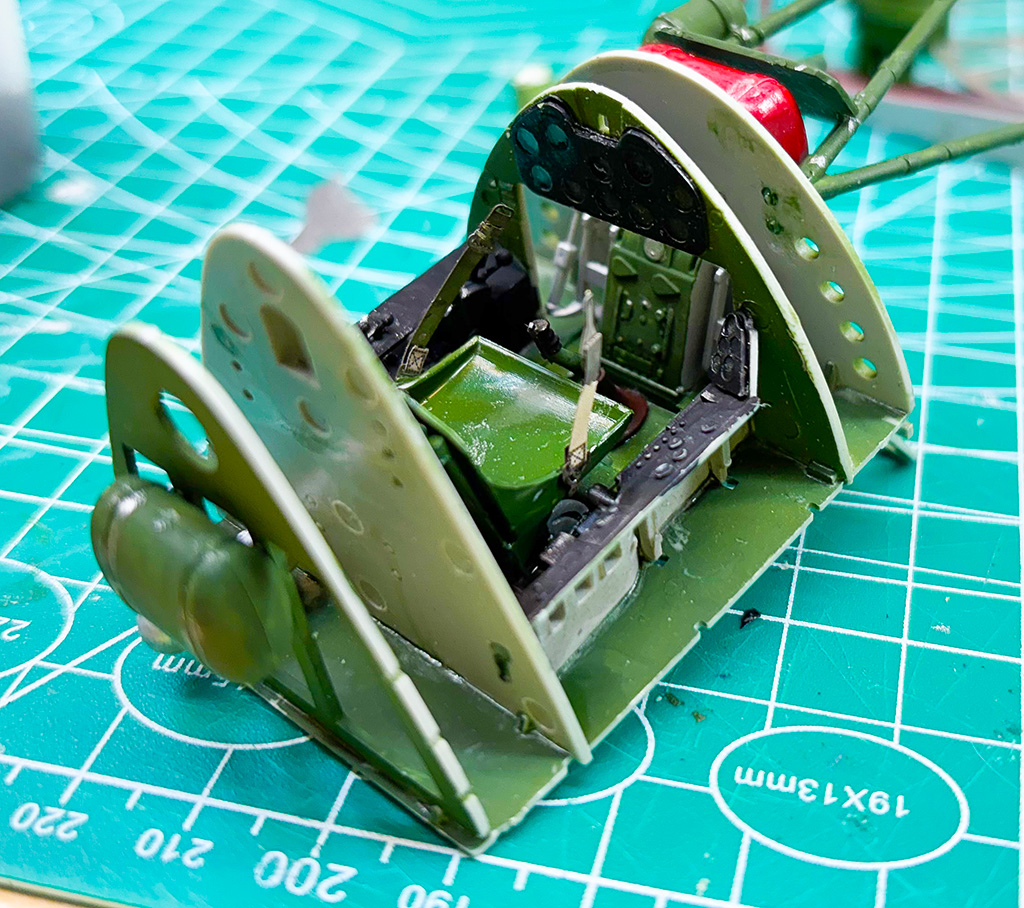
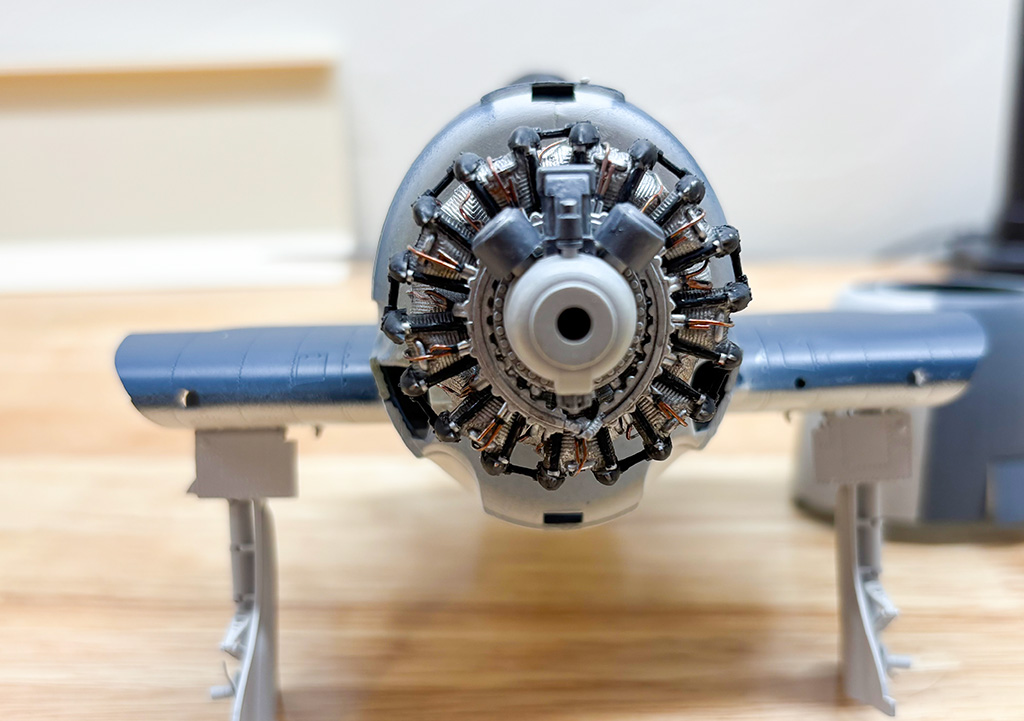
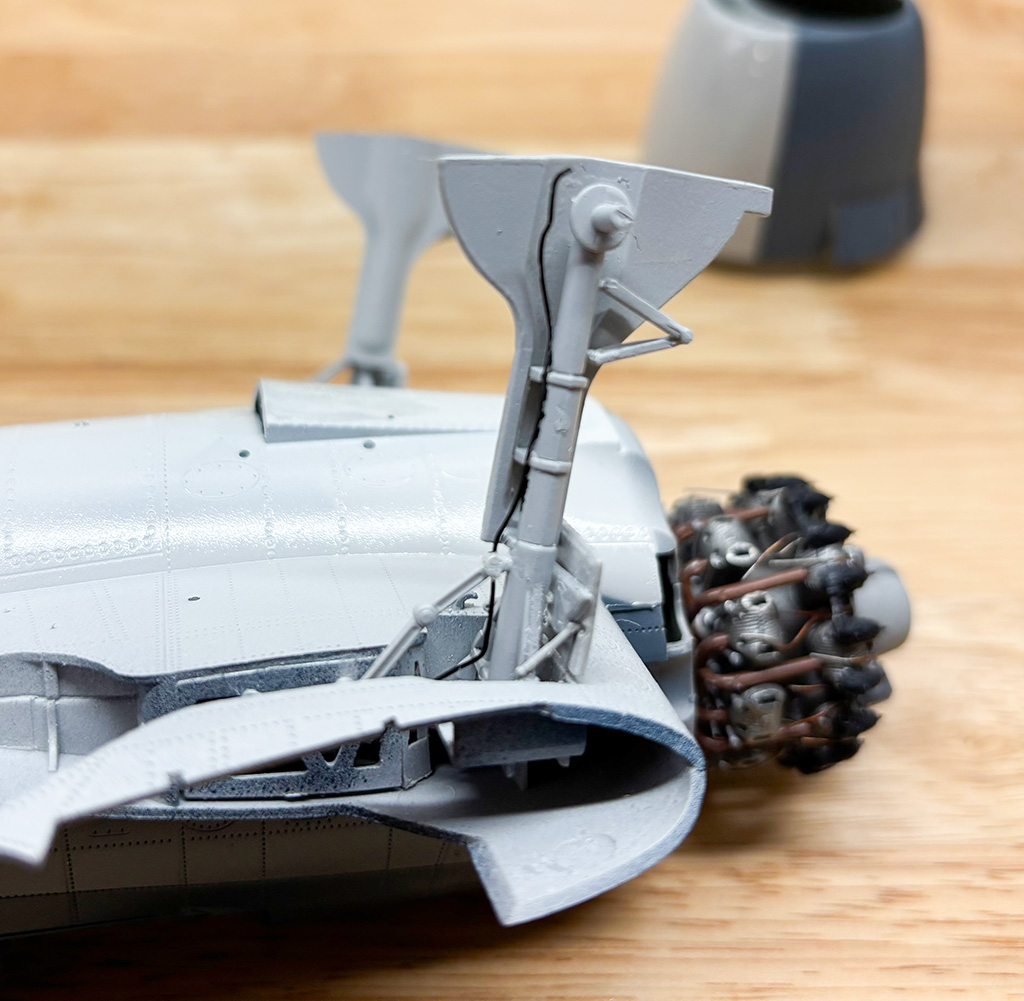
7/6/2025 Here is an update with a few photos.  I've wired the engine, but have only detailed the visable front face.  I've also added brake lines to the landing gear.  Most of the painting has been done – I'll detail the paint I used later.

7/21/2025 Here are the finished photos.  It didn't turn out as nice as I would have liked, but still looks pretty good.

7/28/2025 To view a video of the completed model, go HERE.

<